

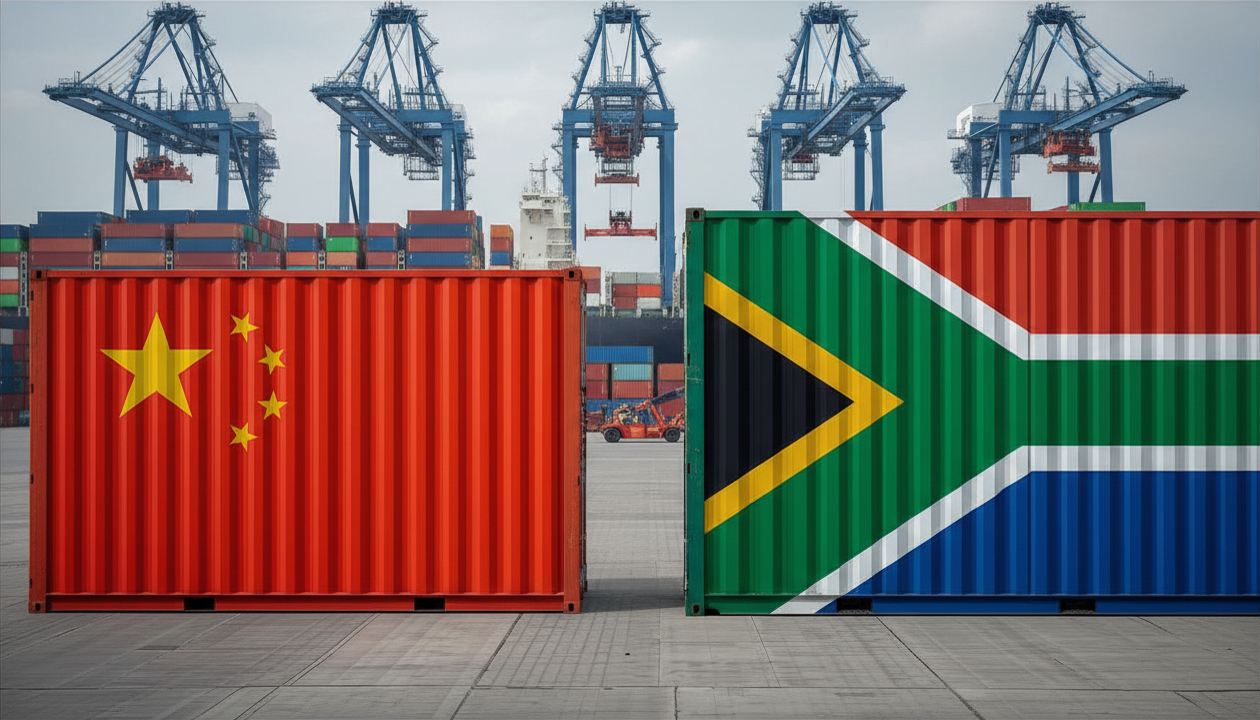
Canva AI generated photo illustrating a China–South Africa trade’s zero tariffs, shared growth, and deeper ties with South Africa + 52 African partners.
By Frans Sello waga Machate I Pretoria, South Africa
PRETORIA – Just two weeks after China became the first major economy to grant zero‑tariff treatment to all 53 African countries with diplomatic ties, a high‑level online seminar has confirmed what many exporters hoped: the policy is already moving goods, and the potential for growth is massive.
On Friday, 15 May, the Sino‑SA Media Club brought together China’s Ambassador to South Africa, H.E. Wu Peng, leading economists, and trade experts to dissect the opportunities and challenges of the landmark trade measure. The two‑hour virtual session, which ran overtime due to enthusiastic engagement, drew 92 participants from across Africa and China.
On 1 May 2026, a 24‑ton consignment of South African apples arrived in Shenzhen, clearing customs duty‑free. Previously subject to a 10% tariff, that single shipment saved thousands of Rands, a tangible early win that Ambassador Wu Peng described as “real market access, real savings, and a real opportunity for African exporters.”
In his keynote address, Ambassador Wu outlined three areas where South Africa stands to gain: agricultural exports, manufacturing competitiveness, and job creation. He noted that protocols for citrus exports to China have already been revised, and work is underway to open the Chinese market to South African cherries and wild seafood.
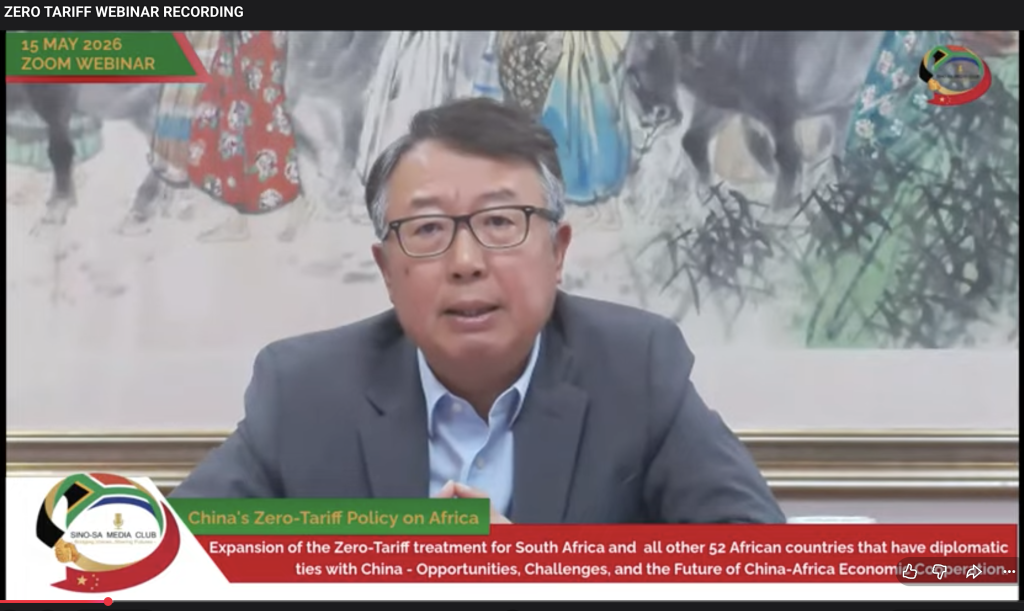
Screenshot of Ambassador Wu Peng delivering his keynote remarks on China’s Zero-Tariff Policy during the Sino-SA Media Club Zoom webinar.
“China is ready to leverage its huge market to provide long‑term, stable, and sustainable opportunities for Africa’s development,” Ambassador Wu said.
Professor Yang Jun, a trade economist from the University of International Business and Economics in Beijing, presented modelling data showing that South Africa’s fruit and vegetable exports to China could rise by more than 80%. Wood and processed wood products are another growth sector, with imports from some African countries expected to increase by over 40%.
Products like Rooibos tea, aloe‑based goods, and flowers, which already have growing recognition in China could see export growth between 45% and 85%, Professor Yang added. He urged South African businesses to target second‑tier Chinese cities, where demand for quality agricultural goods is rising and consumers are price‑sensitive.
Not all challenges are tariff‑related. Professor Gabila Nubong of North‑West University warned that “tariff alleviation does not equate to trade‑related transformation.” If African countries continue exporting raw commodities without building processing capacity, the policy’s long‑term impact will be limited.
Dr. Eliphas Ndou, Acting Chair of the Department of Economics at the University of South Africa (UNISA), noted that structural constraints; including high electricity prices and port inefficiencies at Durban harbour undermine the competitiveness of South African manufactured goods. He also pointed out that some export growth to China has been a diversion from the United States due to US tariffs, rather than organic Chinese demand.
The panel, comprising Prof. David Monyae (University of Johannesburg), Mr. Itumeleng Makgetla (University of Pretoria/Hunan University), and Dr. Ndou, stressed that zero tariffs are a door, but African exporters must walk through it.
Mr. Makgetla called for an “aggressive marketing campaign” to build South African brand recognition in China. “Chinese industries are ubiquitous in South African homes, roads and offices. The same cannot be said about South African products in China,” he said.
Prof. Monyae added that African countries must coordinate under the African Continental Free Trade Area (AfCFTA) to avoid competing against each other and to strengthen their collective bargaining power.
Ambassador Wu confirmed that China will continue negotiating the Agreement on Economic Partnership for Shared Development with African countries, aiming to institutionalise zero tariffs as a long‑term arrangement. He encouraged South African firms to participate in the China International Import Expo (CIIE) and to use cross‑border e‑commerce platforms to reach Chinese consumers directly.
The Sino‑SA Media Club is considering hosting a follow‑up webinar on practical export procedures for July 2026.
