

By Frans Sello waga Machate | Polokwane, South Africa
Deputy President launches InvestSA One Stop Shop as province intensifies drive to convert investment commitments into operational projects
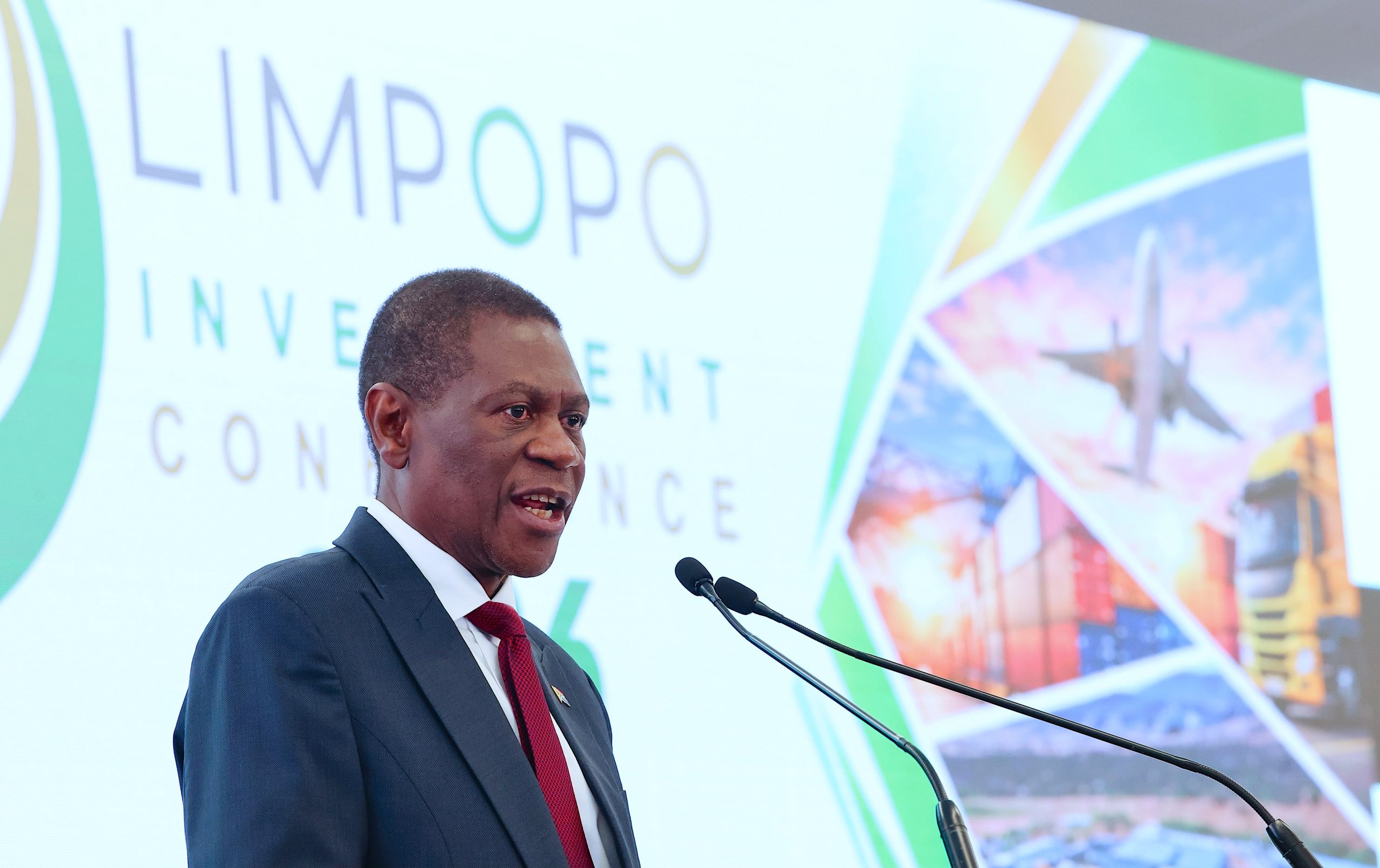
POLOKWANE, South Africa — Deputy President Paul Shipokosa Paulus Mashatile has called on government, business and development finance institutions to accelerate the implementation of investment projects in Limpopo, warning that the true value of investment lies not in the pledges announced but in the jobs, industries and economic opportunities they deliver.
Delivering the keynote address at the sixth Limpopo Investment Conference at The Ranch Hotel in Polokwane earlier today, 15 October, Mashatile said the province needed to translate its substantial investment commitments into tangible economic outcomes that improve people’s livelihoods. The conference, hosted by the Limpopo Provincial Government with the Limpopo Economic Development Agency as the lead agency, was held under the theme, “From Pledges to Progress: Accelerating Implementation and Unlocking Investment in Limpopo.”
A major highlight was the official launch of the InvestSA One Stop Shop in Limpopo, an initiative intended to streamline investment facilitation, improve the ease of doing business and help investors navigate government’s regulatory and administrative processes.
The Deputy President said more than R452 billion in investment pledges had been secured through the Limpopo Investment Conference over the preceding five years, with investments exceeding R71 billion already implemented. These investments had contributed to the creation of nearly 24,000 jobs.
Conference figures put cumulative investment pledges recorded between 2021 and 2025 at R452.38 billion, of which R71.058 billion had been realised, contributing to 23,968 jobs.
The figures highlight both the province’s investment potential and the challenge of ensuring that announced commitments translate into productive economic activity.
Mashatile acknowledged that unemployment, poverty, inequality and inadequate infrastructure continued to affect communities across Limpopo, particularly young people struggling to access economic opportunities.
He identified mining and mineral beneficiation, agriculture, agro-processing, manufacturing, logistics and renewable energy as sectors offering significant opportunities for investment and employment creation.
Limpopo’s abundant mineral resources, fertile agricultural land and strategic position as a gateway to the Southern African Development Community (SADC) give it a competitive advantage in attracting investors and expanding regional trade.
However, Mashatile stressed that trade and investment must strengthen local production, develop value chains and create employment rather than simply facilitate the movement of goods across borders.
He called for greater investment in reliable energy, water security, transport infrastructure, logistics networks and digital connectivity, describing these as essential foundations for a competitive modern economy.
The Deputy President also emphasised the importance of processing more mineral resources locally, adding value to agricultural products and expanding manufacturing capacity.
He said industrialisation must be accompanied by investment in education, technical and vocational training, apprenticeships and workplace learning to ensure young people acquire the skills needed to participate meaningfully in a changing economy.
Small businesses, cooperatives, township enterprises, emerging industrialists and local suppliers should also benefit from investment opportunities, he added.
Opening the conference, Limpopo Premier Dr Phophi Ramathuba welcomed the Deputy President and acknowledged the national government’s continued support for the province’s investment drive.
She said the conference had helped strengthen Limpopo’s economic development efforts, despite persistent unemployment and limited economic opportunities.
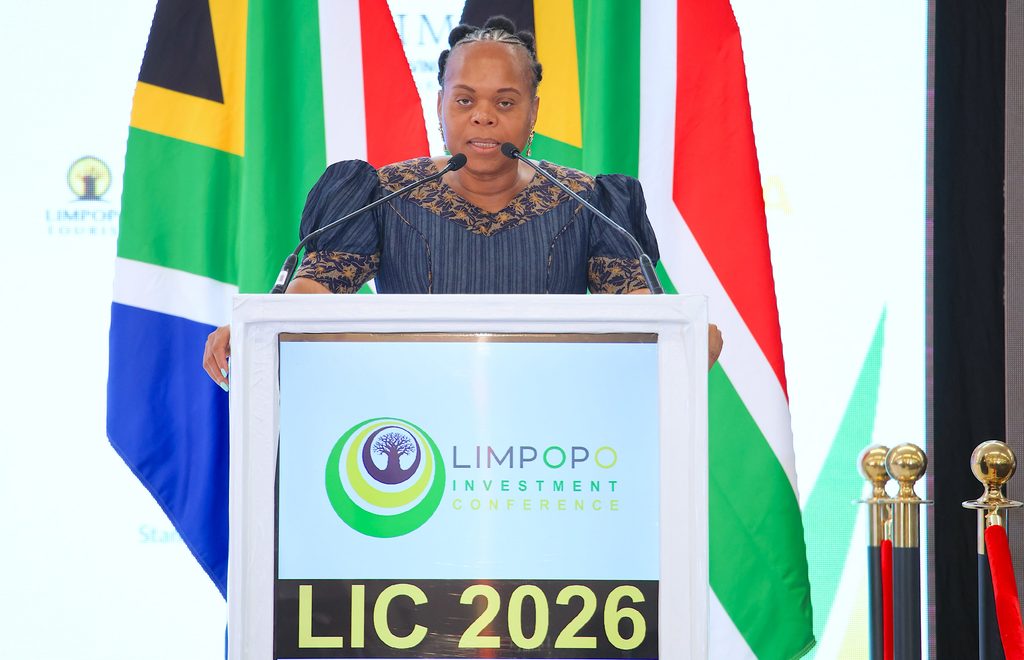
Ramathuba said the province had consistently ranked among South Africa’s top three provinces for job creation over the preceding four years. However, she acknowledged that Limpopo’s unemployment rate remained at 33%, describing it as a significant challenge.
The provincial government, she said, was targeting a reduction in unemployment to below 20% by the end of the current administration.
The Premier also pointed to a decline in poverty, from approximately 60% a decade ago to about 40%, alongside progress in housing development, agricultural self-sufficiency and electricity access.
She said more than 95% of households in the province had access to electricity, while Limpopo had established a leading position nationally in urbanised housing development and households sustaining themselves through agricultural production.
Despite these gains, Ramathuba identified road infrastructure and sustainable water security as critical constraints that needed urgent attention.
She said the province was determined to position itself as a premier investment destination by converting its natural and geographical advantages into industrial development and sustainable employment.
The Musina-Makhado Special Economic Zone and the Fetakgomo-Tubatse Special Economic Zone were central to this strategy, providing platforms to attract investment, support industrialisation and expand economic activity.
The launch of the InvestSA One Stop Shop represents a practical intervention intended to improve investor support and strengthen coordination between government institutions.
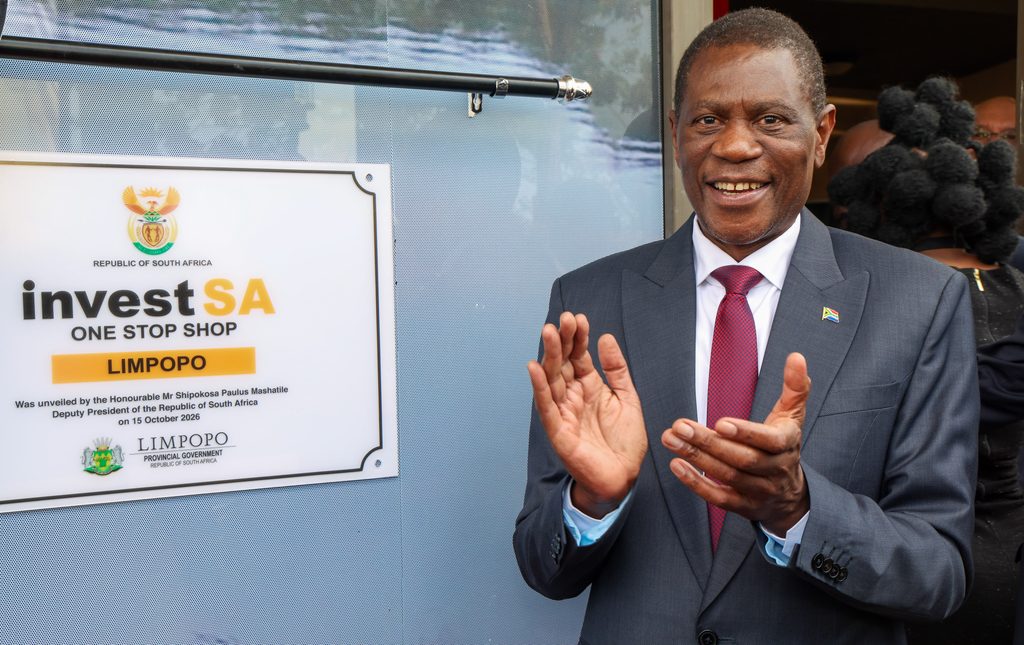
According to Mashatile, the facility will provide investors with a single point of access to government services, helping them navigate approvals, obtain guidance and address administrative barriers that can delay projects.
He said the initiative formed part of government’s broader efforts to reduce the cost of doing business and make South Africa a more attractive destination for domestic and international capital.
He urged provincial departments, municipalities and national government institutions to work together more effectively to resolve investment bottlenecks and ensure that commitments were honoured.
The conference comes amid the national government’s drive to mobilise R3 trillion in investment by 2030, building on close to R890 billion in commitments secured at the sixth South Africa Investment Conference in March 2026.
For Limpopo, the challenge now is to strengthen project preparation, secure financing and approvals, and move investment-ready opportunities towards implementation.
Mashatile called on government, investors, labour, development finance institutions and communities to share responsibility for delivering measurable results.
As the conference concluded, its central test remained whether the province could turn its investment ambitions into functioning businesses, expanded industries and sustainable employment for the people of Limpopo.
