

By Frans Sello waga Machate I Pretoria, South Africa
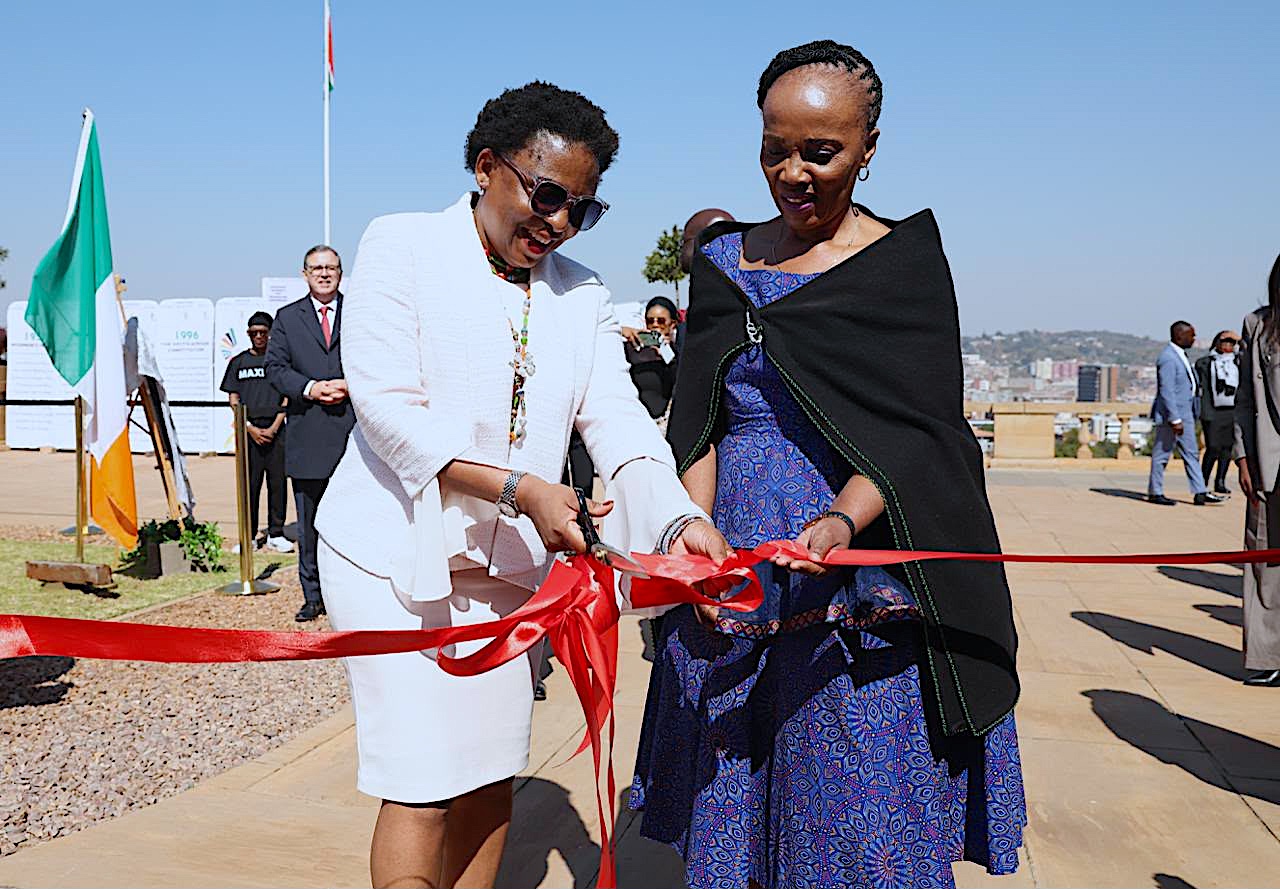
PRETORIA – The Union Buildings in Pretoria played host to the historic launch of the inaugural International Portraits of Power exhibition on 4 August 2026, a landmark cultural diplomacy initiative presented by the Charlotte Mannya-Maxeke Institute (CMMI) in partnership with The Presidency of the Republic of South Africa and participating diplomatic missions.
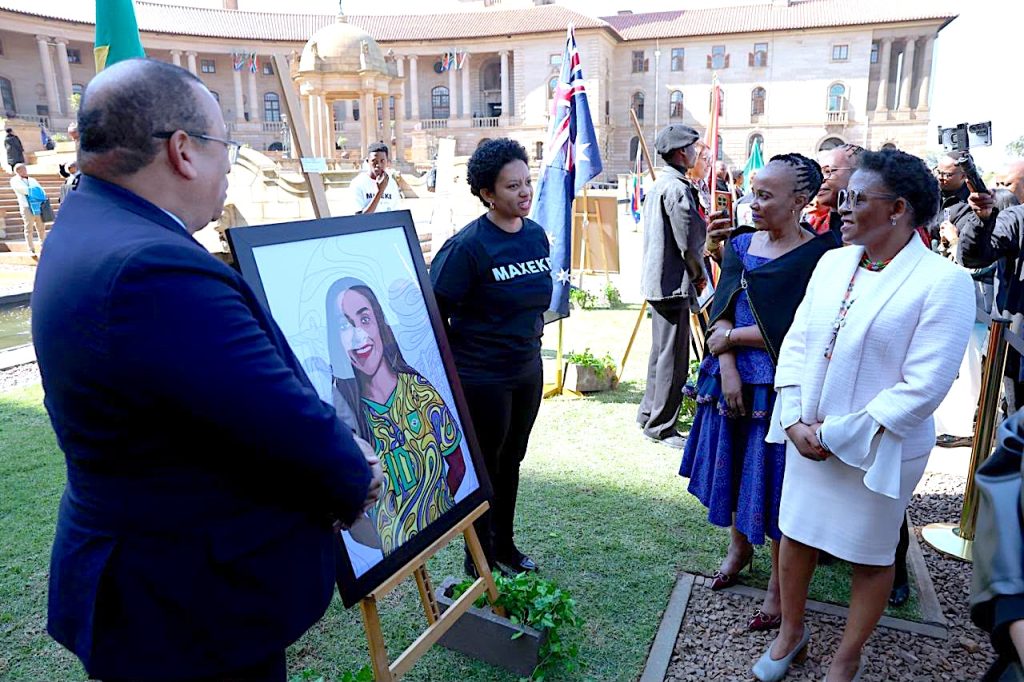
The exhibition, held at the Amphitheatre of the Union Buildings, forms part of the South African government's Women's Month programme, which seeks to honour women's activism towards equality, preserve women's liberation history and strengthen cultural diplomacy as part of the recently launched Milestones of Freedom campaign. It brings together government representatives, cultural practitioners, academics and diplomatic missions from across Africa, Europe, Asia and Oceania, with each nominated woman's legacy interpreted through a specially commissioned portrait.
The Portraits of Power project forms part of a series of legacy projects commemorating the 125th graduation anniversary of Charlotte Makgomo Mannya-Maxeke, a woman of remarkable firsts and enduring influence. As the first Black woman to graduate with a university degree in Southern Africa, obtaining a Bachelor of Science degree on 20 June 1901 from Wilberforce University in Ohio, United States of America, Mannya-Maxeke lit the path for women's rights and gender equality.
Delivering the keynote address on behalf of Deputy President Paul Shipokosa Mashatile, who was unable to attend due to circumstances beyond his control, Minister in The Presidency Khumbudzo Ntshavheni extended the Deputy President's sincere apology and expressed gratitude for the opportunity to address the gathering.
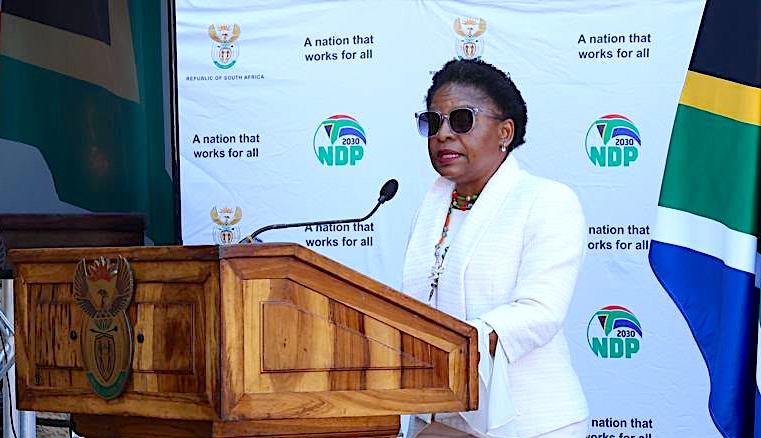
Minister Ntshavheni noted that the occasion was particularly fitting as it took place on the verge of the 70th anniversary commemoration of the historic 1956 Anti-pass Laws Women's March. She highlighted that Mannya-Maxeke was the only woman present when the South African Native National Congress, later known as the African National Congress (ANC), was formed in 1912, and that she decisively asserted the need for women's representation in the corridors of power in South Africa.
"She went on to become the founding President of two of the most important women-led institutions on the continent, the most popular being the Bantu Women's League which later evolved into the ANC Women's League in the 1940s," Minister Ntshavheni said.
The Minister emphasized that the 1956 Women's March would not have been possible had Mannya-Maxeke not led the mobilization and organization of women to fight for their rights. She also noted that Mannya-Maxeke led some of the earliest organized resistance against injustice, including the first women's protest and the first anti-pass laws march in Bloemfontein and Winburg.
Minister Ntshavheni described the Union Buildings as a place that stands not only as the seat of government of the Republic of South Africa, but as a powerful symbol of democracy, resilience and the national journey. She noted that this historic site, now recognized by UNESCO as a World Heritage Site, reflects both the shared past and collective aspirations for the future.
She reminded the audience that earlier this year, government gathered at the same venue to launch the Milestones of Freedom campaign under the theme "Honouring The Past: Delivering the Future," which commemorates significant milestones including the 70th anniversary of the 1956 Women's March, the 60th anniversary of the District Six forced removals, and the 50th anniversary of the 1976 Soweto Students Uprising.
Minister Ntshavheni described Portraits of Power as an exhibition that honours extraordinary women whose courage, leadership, vision and talent have shaped the world. "Portraits of Power goes beyond celebration. It is a recognition that women's contributions transcend borders, cultures and generations," she said. "Across the globe, women are at the forefront of leadership, diplomacy, innovation and development. They are shaping policies, building communities and driving progress in ways that are both transformative and enduring."
She reaffirmed government's commitment to advancing gender equality and the empowerment of women, stating that this commitment is rooted in the Constitution and reflected in policies, programmes and partnerships. "We recognize that inclusive leadership is not optional. It is essential for sustainable development, social justice and lasting peace," she said.
However, the Minister acknowledged that the journey toward full equality is not yet complete. "There remains work to be done to ensure that women everywhere in the world have equal access to opportunities, resources, platforms for leadership and education," she said.
Minister Ntshavheni highlighted the unique ability of art to preserve histories, tell stories that might otherwise be forgotten, and connect people across cultures and continents. "Through exhibitions such as this, we are reminded that art is not only a reflection of society, but also a catalyst for change. It builds bridges where there are divides, it fosters dialogue where there is silence, and it inspires understanding where there is difference," she said.
She called on all present to let the exhibition be more than a moment of admiration, but rather a call to action.
"Let us strengthen global partnerships that promote equality, dignity and opportunity for all," she urged.
Minister in the Presidency for Women, Youth and Persons with Disabilities, Sindisiwe Chikunga, delivered the closing remarks, a call to action and a vote of thanks, congratulating the Charlotte Mannya-Maxeke Institute on the successful launch of what she described as a landmark exhibition that honours twenty exceptional women from South Africa and across the world whose leadership has transformed nations and inspired generations.
Minister Chikunga expressed gratitude to the foundation for being deliberate in documenting the nation's history and heritage with dignity, and for doing so at the Union Buildings in this historic year under the fitting national theme of "Empowered Women, Empower Nations."
She lamented the dangerous vacuum in how history has been documented and often misrepresented, stating that for far too long, this space has been outsourced at a hefty price. "The media and creative space is not only central to the battle of ideas, it carries the very soul of a nation. Portraits of Power is therefore a timely and transformative effort in honouring, and in preserving, the legacy of our founding mothers," she said.
Minister Chikunga outlined seven key commitments that must be made:
First, Africa and the world must move from merely remembering women to building institutions that include women. "Our responsibility is not only to honour the women who changed history, it is to ensure that the next generation of women have the power to define their own futures. A portrait on a wall is a beginning, not a destination."
Second, women must take their rightful place in all areas where decisions are made and power is exercised, especially decisions over the ownership, control and management of the wealth-producing resources of the land.
Third, access must be non-negotiable, connecting young women to education, financial support, networks and institutions that can turn ambition into influence and influence into impact.
Fourth, inter-generational inclusion must be made mandatory, with every woman who has climbed the ladder becoming part of building the ladder for someone else.
Fifth, bridges must be built for women to access all sectors of the economy, with the stories of the women honoured becoming symbols of hope and access that enter classrooms, universities, communities and conversations with young women.
Sixth, institutional commitment must be demanded, not symbolic commitment. "The true measure of our commitment to women is not the number of conferences we hold, or portraits we unveil. It is whether our institutions themselves change; whether women gain access to capital, education, leadership, technology, markets, and decision-making power."
Seventh, she called on every person present to leave with a personal responsibility, to identify one young woman to mentor, one door to open, one institution to challenge, one opportunity to create.

Minister Chikunga extended gratitude to Programme Director Ms Karabo Mohale; the Charlotte Mannya-Maxeke Institute and its Chairperson Mr Thulasizwe Makhanya; The Presidency; Hon. Minister Khumbudzo Ntshavheni for the keynote address; Hon. Minister Thembi Simelane for the Exhibition Overview; Hon. Deputy Minister Peace Mabe; Ms Lenore Goss-Matjie and the South African State Theatre; Ms Khonzi Zondi and Dr Zanele Matsane of the Charlotte Maxeke Education Fund; Curator Ms Palesa Suthane; and the Ambassadors, High Commissioners and Embassy representatives of all fifteen participating countries.
She concluded by paying tribute to the women whose portraits now hang on the walls of the Union Buildings. "You did not ask to be remembered. You simply refused to be forgotten. Today, on behalf of a grateful nation, and of an inspired continent, we say: we know you, we honour you, we rise with you, and we commit to becoming you."
CMMI Strategic Leader Kimberly Nkuku said the exhibition was designed to present Maxeke's life and achievements as a complete narrative, rather than the fragmented accounts that have often defined her legacy. "Our mission is to tell Charlotte Maxeke's story as a whole. That is where Portraits of Power was born, bringing together the story of one woman in a single form. And what better way to do it than through art and creative expression," Nkuku said.
"She had the courage to travel to the United States by ship at a time when slavery had only recently been abolished, yet many people do not know her full story. Maxeke's story is also not unique to her. Women in many countries experienced similar oppression," she said.
The exhibition features portraits of influential women from South Africa and other countries, with diplomats from Namibia, Malawi, Mozambique and Brazil participating in the launch to celebrate women leaders and activists from their respective nations. Nkuku said the institute aims to use multiple forms of artistic expression to preserve and expand Maxeke's legacy, particularly among younger generations.
The portraits were created by South African artists in collaboration with participating diplomatic missions, with each nominated woman's legacy interpreted through a specially commissioned work.
The International Portraits of Power exhibition stands as a powerful testament to the enduring legacy of Charlotte Mannya-Maxeke and the extraordinary women who have shaped nations and inspired generations across the globe. As Minister Chikunga reminded those in attendance, drawing on Maxeke's own words: "If you can rise, bring someone with you."
