
By Frans Sello waga Machate I Pretoria, South Africa
PRETORIA, South Africa – In a historic gathering brimming with both the weight of the nation’s challenges and the palpable hope for its renewal, the first National Convention of the National Dialogue concluded at the University of South Africa (UNISA) on Saturday, 16 August 2025, not with a final decree, but with a powerful beginning.
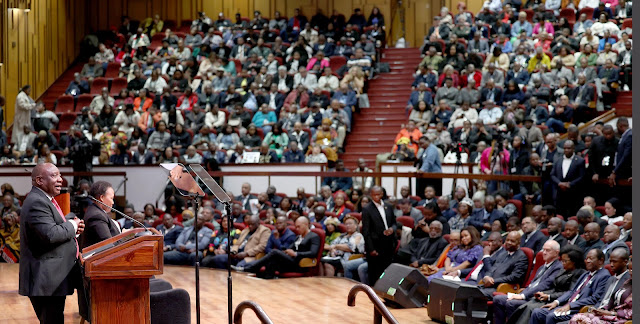
Over two days, more than 1,000 delegates from over 200 organisations transcended their differences, gathering under one roof not as representatives of factions, but as united South Africans. The convention, convened by President Cyril Ramaphosa, was designed from the outset to be a launching pad, not a finale, but a moment to formally hand over the baton of national introspection from the state to its citizens.
In his powerful opening address, President Ramaphosa set the tone, framing the event as a constitutional imperative and a national duty. “I have called this first National Convention in my capacity as the Head of State, to promote the unity of the nation,” he stated, anchoring the process in Section 83 of the Constitution. He was unequivocal that this was not a partisan platform but a national one, where “no voice is too small and no perspective is too inconvenient to be heard.”
The road to the convention was not without its challenges, a fact acknowledged by both the Eminent Persons Group (EPG) and the Convention Organising Committee. The late withdrawal of several stalwart foundations from the preparatory process due to disagreements over integrity, inclusivity, and trust posed a significant hurdle. However, a swift restructuring led to the formation of a new, determined Organising Committee comprising civil society volunteers, NEDLAC, UNISA, and The Presidency, who worked tirelessly to ensure the event proceeded.
As confirmed by the Inter-Ministerial Committee (IMC) chaired by Deputy President Paul Mashatile, stringent measures were taken to ensure fiscal responsibility, with costs being borne by existing budgets of NEDLAC and the Presidency, and significantly offset by UNISA’s generous provision of the venue, facilities, and services free of charge.
The convention itself was a vibrant tapestry of South African society. As President Ramaphosa poignantly noted, the hall held “farmers and informal traders, civic activists and policy makers, traditional leaders and waste pickers, industrial workers, unemployed men and women, people from informal settlements and rural villages.” This diversity fuelled two days of what the concluding statement called “robust discussion,” where delegates openly shared their “hopes, aspirations, fears and frustrations.”
The deliberations crystallised around key themes that cut to the heart of the national experience – the economy and jobs; crime and corruption; fixing the state; education and health; the scourge of gender-based violence; building a cohesive value system; and addressing intergenerational trauma. Crucially, the convention agreed that these themes were merely a guide, and that the nationwide dialogues to follow must be driven by the issues citizens themselves deem most critical.
A significant outcome was the agreement on a roadmap for a citizen-led dialogue process over the next 6-9 months, aiming for thousands of community-level engagements. The convention emphasised that these dialogues must use diverse methods, “crafted in communities using local knowledge and expertise.”
To steer this mammoth undertaking, the process to establish a broadly representative Steering Committee was extended by two weeks to ensure no sector is left behind. Twenty-two initial sectors were expanded, and each is now tasked with selecting its nominee by the end of August 2025.
In her moving closing speech, Ms. Lindiwe Mazibuko, Co-Deputy Chairperson of the EPG, connected the current dialogue to the nation’s profound history of negotiated change. “Dialogue has always been fundamental to our democracy,” she said, referencing CODESA, the 1994 elections, the Constitution, and the Truth and Reconciliation Commission. She hailed the convention as a “foundational step” and assured citizens that the EPG was committed to walking the difficult path ahead without wavering.
The resounding message from the South African capital city; Tshwane is that this was not another talk shop. It was the activation of a national machinery of listening and action. The conversation has not ended; it has just officially begun. The success of this ambitious project now rests where it was always intended; in the community halls, places of worship, streets, and homes of every South African, who are now called upon to talk, to listen, and to collectively forge the blueprint for the next chapter of the nation.