

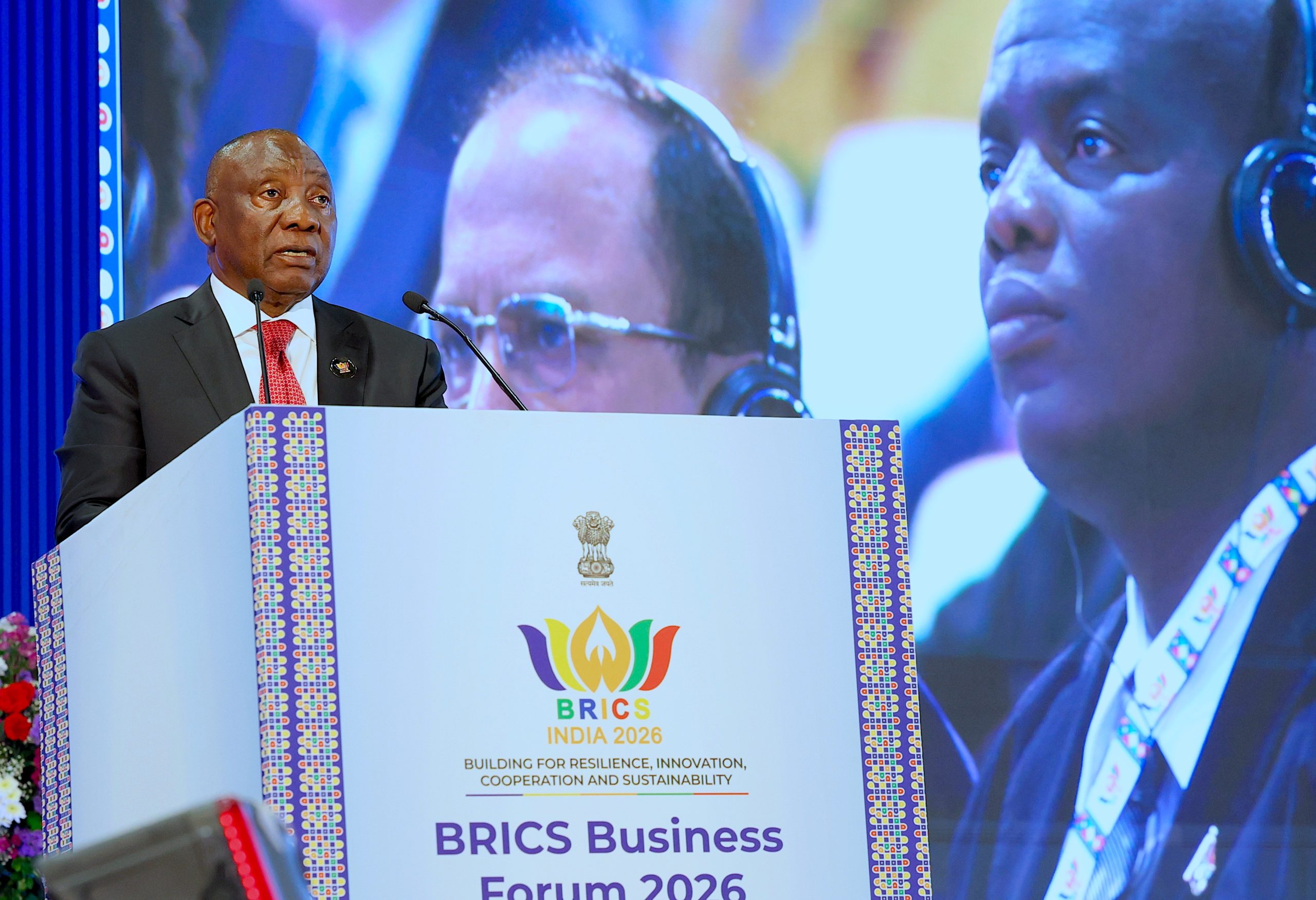
By Frans Sello waga Machate | New Delhi, India
NEW DELHI — South African President Cyril Ramaphosa has called on BRICS governments and business communities to move beyond declarations and conventional trade relationships, urging them to channel investment into manufacturing, beneficiation, infrastructure, technology and productive capacity across the Global South.
Addressing the BRICS Business Forum Leaders’ Dialogue in New Delhi on Friday, 11 September 2026, on the eve of the 18th BRICS Leaders’ Summit, Ramaphosa said the expanded grouping had reached a critical point in its economic development and needed to translate its considerable potential into tangible benefits for its people.
His intervention placed South Africa’s economic priorities; particularly industrialisation, value addition and investment in productive capacity, firmly within the broader BRICS economic agenda.
The President told BRICS business leaders that the work of the BRICS Business Council and its working groups was essential to turning the ambitions of the grouping into meaningful economic cooperation.
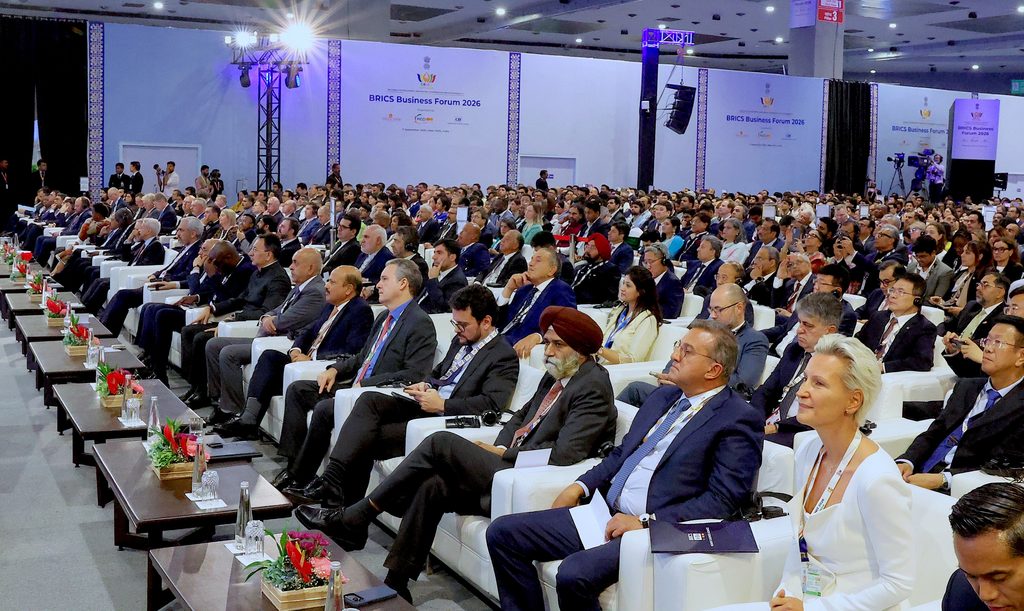
The BRICS Business Forum brought together leaders and representatives of the grouping’s business communities, investors and entrepreneurs, providing a platform for government and the private sector to discuss ways of strengthening trade, investment and business-to-business cooperation. The South African chapters of the BRICS Business Council and BRICS Women’s Business Alliance participated in the forum.
Ramaphosa used the occasion to recall South Africa’s contribution to strengthening the institutional relationship between government and business within BRICS. He noted that the BRICS Business Council was established during South Africa’s first BRICS Presidency in 2013, reflecting the recognition that economic cooperation could not be driven by governments alone.
For Ramaphosa, this government-business compact is particularly important as the global economy undergoes significant structural changes, including shifting trade patterns, rapid technological advances and growing climate pressures.
He stated that these changes are forcing countries and companies to reconsider where they source goods, where they produce and where they invest; creating an opportunity for BRICS to help shape a more resilient and inclusive economic future for the Global South.
“As BRICS, we find ourselves at an inflection point,” Ramaphosa said.
The President warned, however, that BRICS should not simply reproduce within the expanded grouping the same economic patterns that have historically left developing economies concentrated at the lower end of global value chains.
“We should not reproduce that pattern within the expanded BRICS,” he added.
This message was particularly significant for South Africa and the wider African continent, where critical minerals are increasingly regarded as strategic resources for the global energy transition and the development of new industries.
Ramaphosa said Africa could not remain primarily a supplier of minerals while processing, manufacturing and higher-value economic activity took place elsewhere.
He therefore called for a redirection of investment towards manufacturing and beneficiation, industrial technologies, energy systems, infrastructure and logistics.
The President further urged companies to look beyond market access when considering investment opportunities in BRICS economies, arguing that businesses should establish production facilities and help develop local capabilities.
“Companies must invest not only to access markets but to establish production facilities and develop local capabilities,” he said.
This approach corresponds closely with South Africa’s stated priorities for the New Delhi summit, where the country has sought to expand intra-BRICS trade and investment, promote industrialisation and value addition, and mobilise investment in African infrastructure aligned with the African Continental Free Trade Area (AfCFTA).
Ramaphosa’s call for deeper productive relationships was echoed in different forms by other participants in the Leaders’ Dialogue.
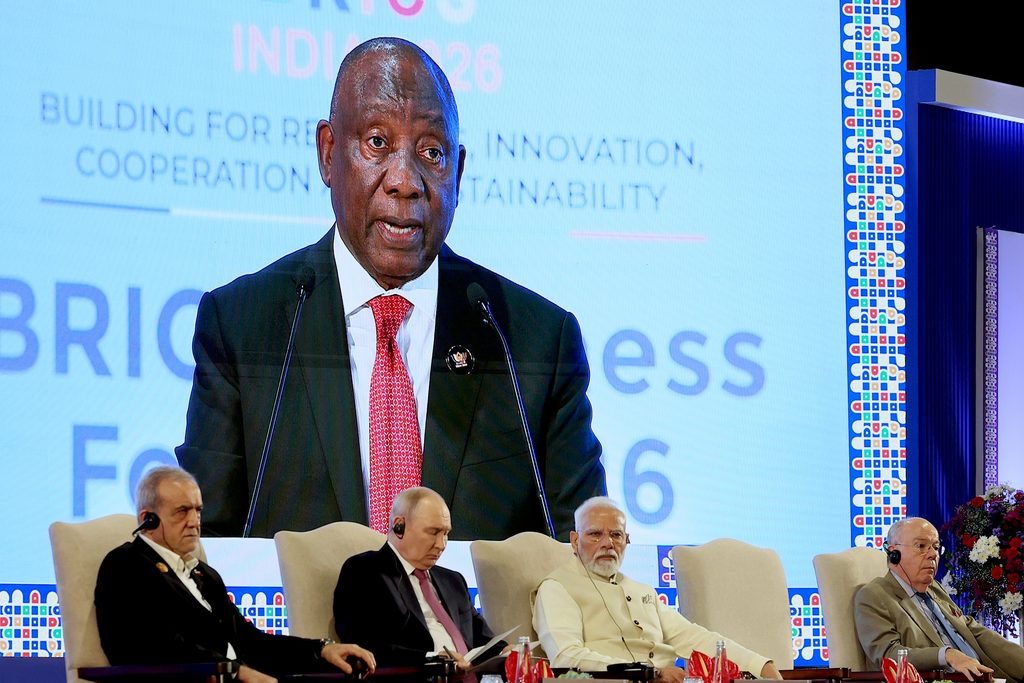
Indian Prime Minister Narendra Modi called for the reduction of trade barriers and greater opportunities for businesses, start-ups and small enterprises across BRICS economies. He proposed annual targets to support 100 BRICS start-ups in expanding into other BRICS markets and to foster 1,000 new business partnerships.
Russian President Vladimir Putin, meanwhile, highlighted infrastructure, logistics, finance and technological cooperation as areas where BRICS countries could strengthen economic ties. He said Russia remained open to cooperation with partners around the world while emphasising the grouping’s role in trade, investment, energy and food security.
Brazilian Foreign Minister Mauro Vieira who spoke on behalf of President Lula da Silva who could also attend the summit in person as he is focusing on the Brazilian presidential elections campaign; underscored the growing economic weight of the Global South, arguing for stronger productive cooperation among BRICS economies amid increasing protectionism, economic coercion and unilateral sanctions.
Iranian President Masoud Pezeshkian addressed the economic and security challenges facing Iran, arguing that economic security could not be separated from national and regional security, while highlighting the impact of sanctions on his country.
Taken together, the interventions reflected a central concern running through the Business Forum: how the enlarged BRICS grouping can convert its growing economic weight into practical commercial relationships, investment and development.
India’s BRICS chairship has placed particular emphasis on resilience, innovation, cooperation and security, with the summit bringing together BRICS members, partner countries and invited participants. South Africa entered the New Delhi summit with a stated intention to use its BRICS membership to advance trade, investment, industrialisation, value addition and infrastructure development.
For South Africa, Ramaphosa’s message therefore extended beyond the immediate business forum. It articulated an economic vision in which BRICS becomes a mechanism for changing the geography of production and value creation, rather than simply increasing the volume of trade between member countries.
His intervention placed the private sector at the centre of South Africa’s BRICS economic engagement, while reinforcing Pretoria’s call for partnerships that generate local production, industrial capabilities, technological development and greater value from the continent’s natural resources.
As the expanded BRICS seeks to deepen economic cooperation across a diverse membership, the South African position articulated in New Delhi is that the measure of success should ultimately extend beyond the growth of trade figures to whether investment creates productive capacity, jobs, technology and sustainable economic development across the Global South.
