

By Frans Sello waga Machate | Pretoria, South Africa
PRETORIA – The Chinese Embassy in South Africa on Friday commemorated the 105th anniversary of the founding of the Communist Party of China (CPC), with senior government leaders, diplomats, liberation movement veterans and political leaders using the occasion to reaffirm the enduring strategic partnership between China and South Africa and to call for deeper cooperation in advancing industrialization, economic development and the modernization of the Global South.
The celebration, held at the Chinese Embassy in Pretoria, brought together former President Kgalema Motlanthe, former Minister of International Relations and Cooperation Dr Naledi Pandor, ambassadors and members of the diplomatic corps, senior South African government officials, African National Congress (ANC) National Executive Committee members, South African Communist Party (SACP) leaders and representatives of alliance partners.
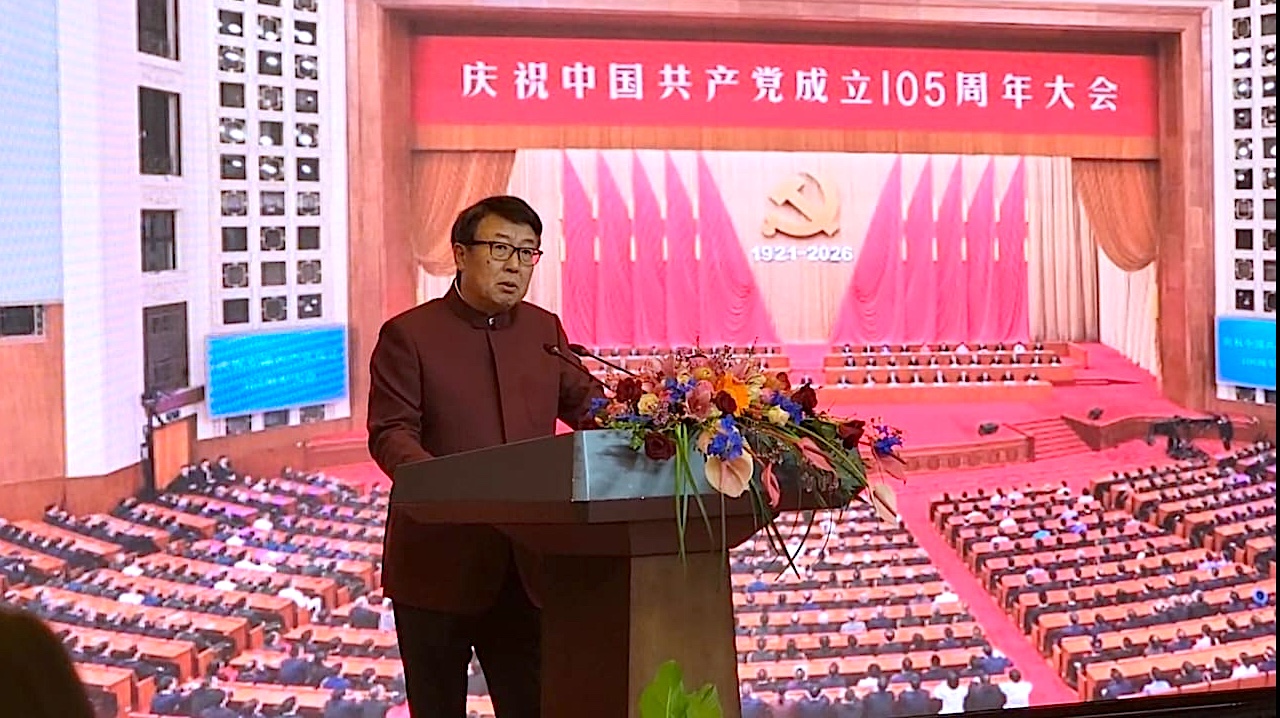
Delivering the keynote address, Chinese Ambassador to South Africa H.E. Wu Peng described the founding of the Communist Party of China in 1921 as a defining moment in China’s modern history, saying the party had led the country through every major phase of its transformation; from revolution and reform to becoming one of the world’s leading economic powers.
“Today, we in China are striving to advance the great rejuvenation of the Chinese nation through Chinese modernization,” Wu said, adding that he believed Africa could similarly realize sustainable development by pursuing “Africa’s own approach to modernization.”

Reflecting on the CPC’s 105-year journey, Ambassador Wu said the party had remained committed to its founding mission of seeking prosperity for the Chinese people while contributing to global peace and development.
“As one of the world’s largest governing parties, the Communist Party of China is committed not only to the well-being of the Chinese people, but also to the progress of humanity and the common good of the world,” he said.
The ambassador highlighted China’s expanding role in global development, noting that the Belt and Road Initiative now includes more than 150 partner countries with cumulative investment exceeding US$1 trillion, while China remains the largest trading partner of more than 160 countries and regions worldwide.
Turning to Africa-China cooperation, Wu said Beijing continued to deepen practical cooperation with African countries on the basis of equality, mutual benefit and non-interference.
He noted that from 1 May this year China had implemented a zero-tariff policy covering 100 percent of tariff lines for products from the 53 African countries maintaining diplomatic relations with Beijing, coupled with expanded market access measures aimed at increasing African exports.
“It is my hope that South Africa and its development partners could attach importance to China’s favourable policies, so that there can be more investment in South Africa, for stronger local manufacturing exports to China,” Wu said.
The ambassador also reaffirmed China’s long-standing support for Africa, citing Beijing’s historical backing of South Africa’s liberation struggle against apartheid and its continued commitment to strengthening cooperation through initiatives supporting Africa’s modernization.
He said China and South Africa now stood “at a new starting point for development and renewal,” with the Communist Party of China ready to work with the ANC and other South African political parties to explore development paths suited to their respective national realities while jointly building “a high-level China-South Africa community with a shared future.”
Representing ANC Secretary-General Fikile Mbalula, ANC National Executive Committee member Lindiwe Zulu delivered the governing party’s official message of solidarity after Mbalula was unable to attend because of organizational commitments.
Zulu congratulated the Communist Party of China on reaching its 105th anniversary, describing its development achievements over the past century as among the most significant political accomplishments of the modern era.
“The CPC in its 105-year history has built a China that today feeds one-fifth of humanity, has lifted 800 million people out of poverty, and stands as a pillar of a more balanced, multipolar world,” she said.
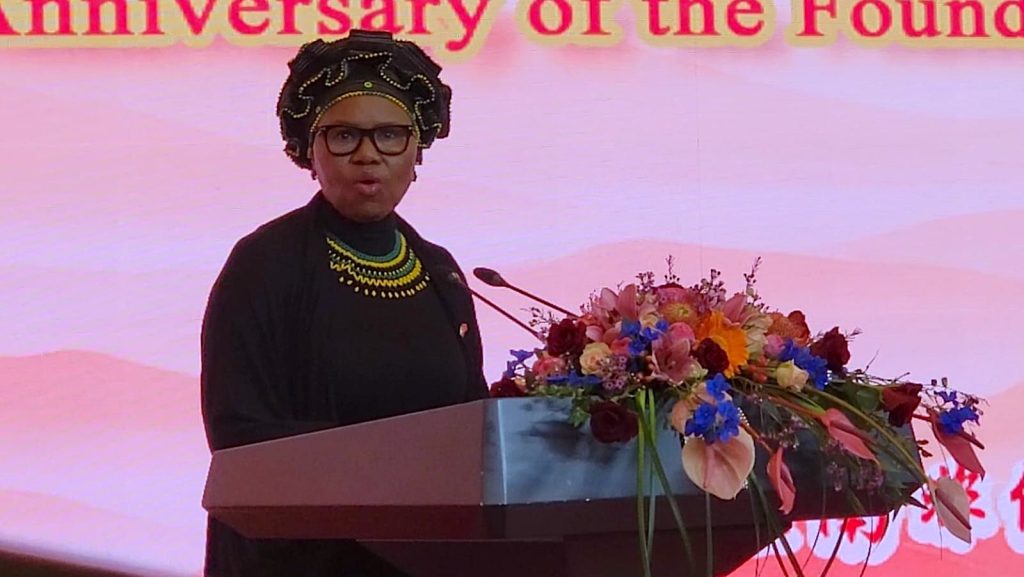
She reflected on the historical relationship between the ANC and the CPC, recalling China’s political and material support for South Africa’s liberation movement during the struggle against apartheid.
“The friendship between the African National Congress and the Communist Party of China is one forged in the trenches of struggle,” Zulu said, noting that China had provided training, resources and political solidarity when many countries remained hesitant to support South Africa’s liberation movement.
Quoting former President Nelson Mandela, she reminded guests of his appreciation for China’s support during his imprisonment on Robben Island, recalling Mandela’s words that “China is the spiritual pillar which helps me survive the days in Robben Island prison.”
Zulu also praised China’s rapid socio-economic development, citing the eradication of extreme poverty, advances in renewable energy, high-speed rail, electric mobility and artificial intelligence, as well as initiatives such as the Belt and Road Initiative and the Global Development Initiative.
She urged that South Africa’s All-Round Strategic Cooperative Partnership with China should translate into tangible outcomes for ordinary South Africans.
“It must become a factory floor in South Africa. It must become a rail line that connects our cities and communities. It must become advanced manufacturing, technology innovation, energy security, food security, skills for young people, opportunities for women and jobs,” she said.
Reaffirming the ANC’s foreign policy position, Zulu reiterated the party’s support for the One-China policy and called for expanded cooperation between the ANC and CPC through leadership exchanges, youth development, governance cooperation and implementation of commitments made under the Forum on China-Africa Cooperation (FOCAC).
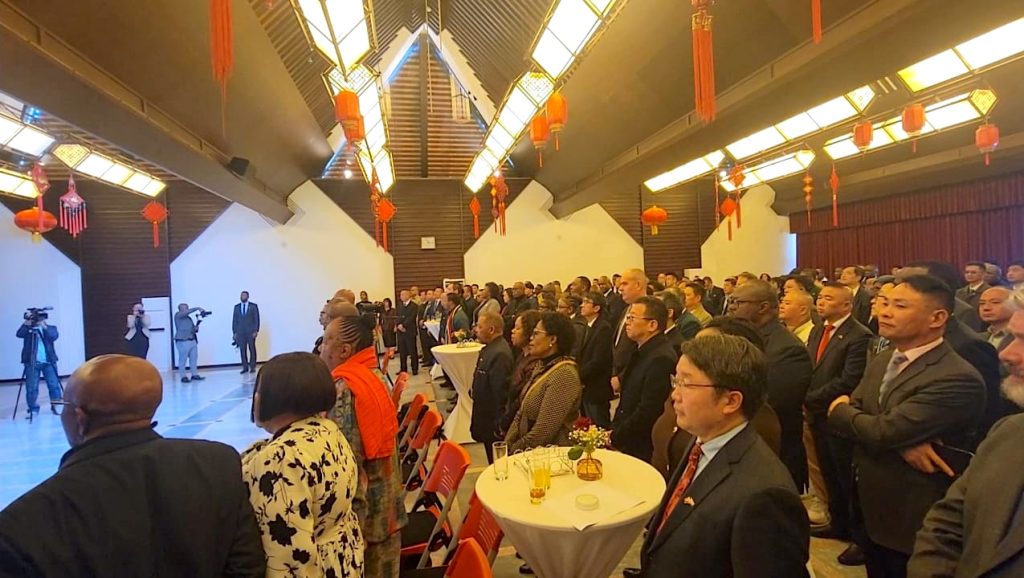
The anniversary celebration underscored the growing political and economic partnership between Pretoria and Beijing at a time when bilateral cooperation continues to expand across trade, investment, infrastructure development, industrialization, education and multilateral diplomacy.
As South Africa prepares to deepen cooperation with China under the outcomes of the 2024 Beijing Summit of the Forum on China-Africa Cooperation, speakers agreed that the longstanding relationship between the two countries is entering a new phase focused on shared modernization, industrial development and building a more inclusive global economic order.
The event concluded with renewed commitments from both Chinese and South African leaders to strengthen party-to-party relations, deepen people-to-people exchanges and expand practical cooperation aimed at delivering sustainable development and shared prosperity for both nations.
