

By Frans Sello waga Machate I Pretoria, South Africa
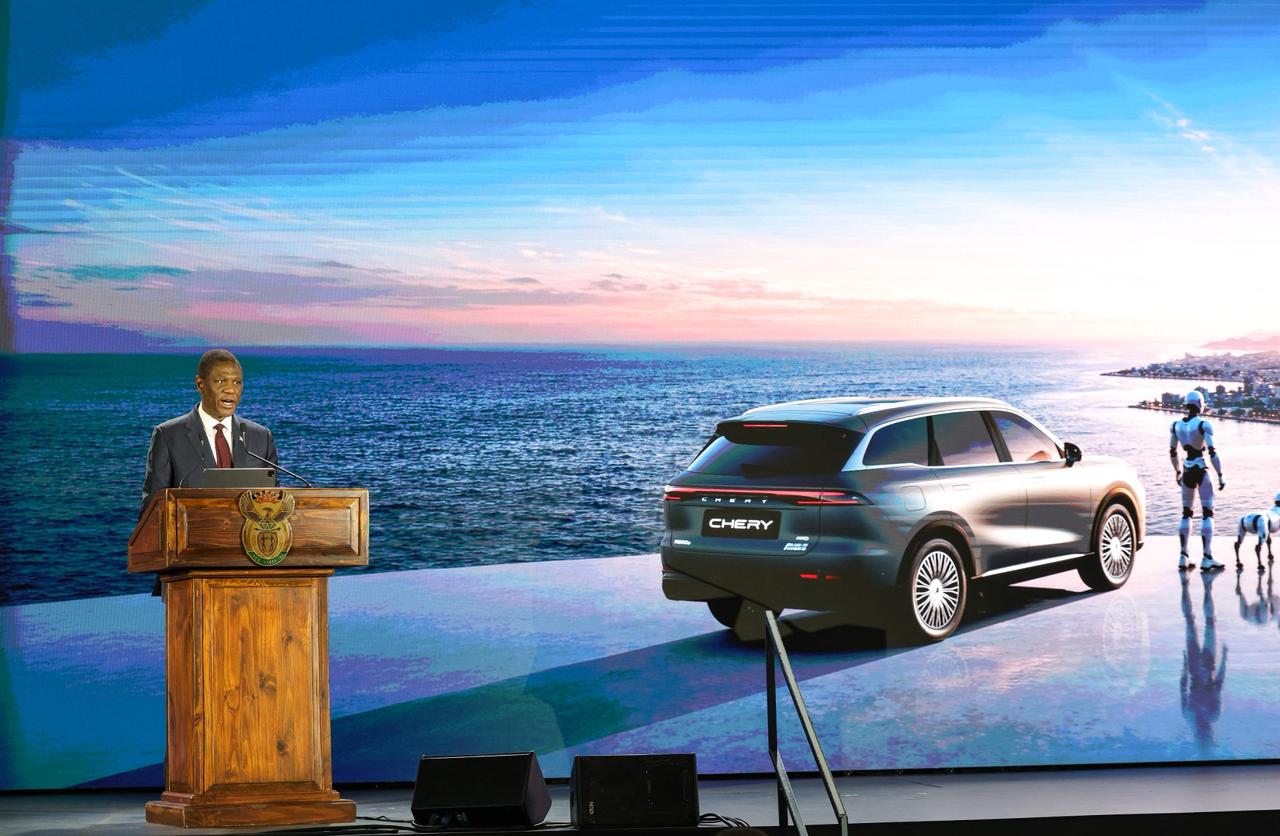
PRETORIA – The silence that had crept over the Rosslyn production facility over the past year was shattered this afternoon, not by the roar of engines, but by the resounding echo of diplomatic accord and industrial ambition. In a ceremony that blended the gravitas of state policy with the dynamism of global capital, Chery International officially took the keys to the historic plant, signaling what Deputy President Paul Mashatile described as a “living testament” to South Africa’s resilience as an investment destination.
For a facility that first opened its doors in 1963, the handover represents more than a change of signage; it is a strategic pivot. Chery, which has rapidly ascended to become the second-largest passenger vehicle brand in the country by sales volume (trailing only Toyota in the first five months of 2026), is transitioning from a successful importer to a committed local manufacturer. The acquisition, which retains all 692 existing employees and promises to generate nearly 3,000 direct and indirect jobs, is a bold counterpoint to the global headwinds of supply chain disruption and rising protectionism.
Delivering the keynote address, Deputy President Mashatile drew on his own history with the precinct, recalling his tenure in the Gauteng provincial leadership. “For me, Rosslyn and the automotive sector carry a personal affinity that goes back many years,” he told the gathering of more than 350 dignitaries, including Chinese Ambassador Wu Peng, Gauteng Premier Panyaza Lesufi, Chery Group Chairman, President and Founder Yin Tongyue, Chery Automobile and Chery International Vice President Charlie Zhang and City of Tshwane Executive Mayor Nasiphi Moya. “When concerns arose about the possible exit of BMW from Rosslyn, we intervened because we understood that losing such a strategic anchor would have weakened not only Gauteng’s industrial base but also South Africa’s standing as a serious automotive manufacturing destination.”
That experience, he noted, remains a guiding principle that government must remain close to industry, workers, and communities when the future of production is at stake. The Chery investment, he argued, reinforces South Africa’s position as the “automotive gateway to the African continent,” leveraging the African Continental Free Trade Area (AfCFTA) to potentially turn the Tshwane Automotive Special Economic Zone into a hub for continental exports.
In a nuanced segment of his address, Mashatile acknowledged the inherent tension in foreign acquisitions of local industrial assets. “While such acquisitions are beneficial as they bring in crucial capital and advanced technology, they also raise significant issues regarding de-industrialization,” he stated. The concerns, he elaborated, centre on the potential erosion of local ownership within the manufacturing sector.
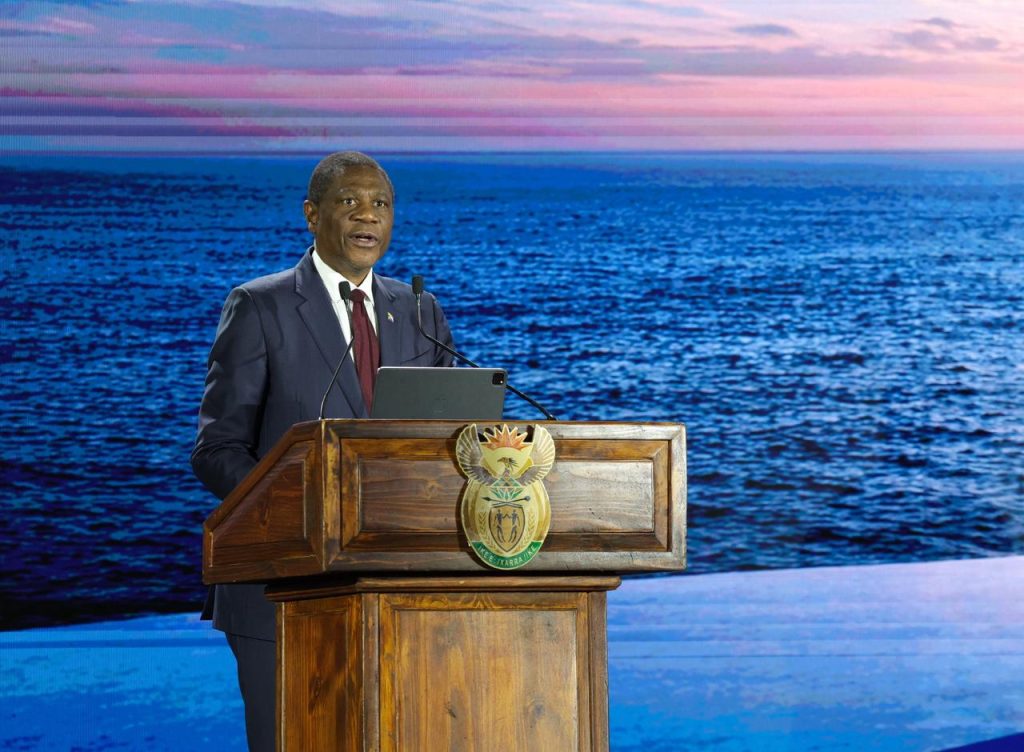
To mitigate this, the government is adopting a state-led strategy that enforces local procurement rules and competition laws. “We strongly encourage foreign-owned companies to source materials and utilize local factories instead of relying on imports,” Mashatile emphasized. “Our people are absolutely the greatest asset.”
Chery appears to have taken this directive to heart. Chery Holding Group Chairman Yin Tongyue, reaffirmed the company’s founding philosophy; “In Somewhere, For Somewhere, Be Somewhere.” He elaborated, “Wherever we invest, we commit. We become part of the local economy, part of the community, part of the country’s future. Today proves that commitment. We have moved from being an importer to a manufacture; and from a market participant to a long-term partner in South Africa’s industrial story.”
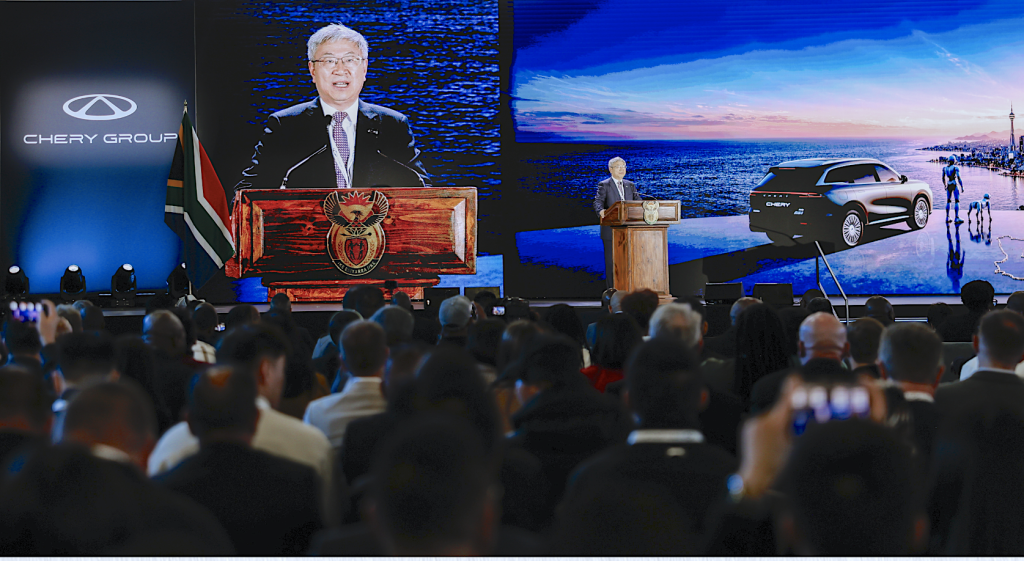
The financial and logistical scale of the project is substantial. Chery will invest heavily in upgrading the plant’s utilities and facilities over the next 12 to 18 months. Initial production is slated to commence in mid-2027, with a ramp-up target of 15,000 units in the latter half of that year. Upon reaching full single-shift capacity, the factory will produce 50,000 vehicles annually.
Crucially, the company has launched an aggressive localization programme, aiming for a 40% local content rate by 2028. This involves surveying Tier-1 suppliers and integrating local firms into the logistics, components, and services chains. As Mashatile noted, “Localization enables township businesses to become engines of inclusive growth, and it ensures that innovation flows beyond the factory floor and into the broader economy.”
With an ambition to exceed 100,000 annual vehicle sales in South Africa; a target that would double its current trajectory, Chery is betting that the country’s industrial future is as bright as its automotive past. For Rosslyn, a precinct that once feared the silence of shutdown, the engines are about to start turning once more.
