

By Frans Sello waga Machate I Bethal, South Africa
BETHAL, Mpumalanga — The commercial launch of the Ummbila Emoyeni Wind Energy Facility earlier today has underscored the deepening clean energy partnership between South Africa and China, with Chinese wind turbine manufacturer Goldwind playing a central role in delivering the 155 MW first phase of what will become South Africa’s largest renewable hybrid energy facility.
President Cyril Ramaphosa, officiating at the launch, welcomed Chinese companies’ participation in South Africa’s renewable energy development, stating: “We are very pleased that it is a company that is riding on the relationship that South Africa has with China”. He noted that South Africa’s future energy mix will combine coal, wind, hydropower, nuclear, solar, gas and other emerging technologies to ensure energy security while advancing decarbonisation.

Goldwind, founded in 1998, has become a global leader as an integrated power solution supplier with more than 169 GW of installed wind power capacity worldwide. The company began its African journey in South Africa in 2010 and has remained committed to the promise: “In Africa, For Africa”. To date, Goldwind will deliver more than 2.2 GW of renewable energy capacity across South Africa, generating approximately 5.8 million megawatt-hours of clean electricity annually and helping avoid around 6.5 million tons of carbon emissions each year.
The Ummbila Emoyeni project features 25 Goldwind GWH182-6.2 MW smart wind turbines, with a rotor diameter of 183.5 metres, the largest rotor diameter of any operational wind project in South Africa. The project’s annual power generation of 480 million kilowatt-hours is expected to meet the electricity needs of approximately 500,000 households while reducing carbon emissions by about 400,000 tons annually.
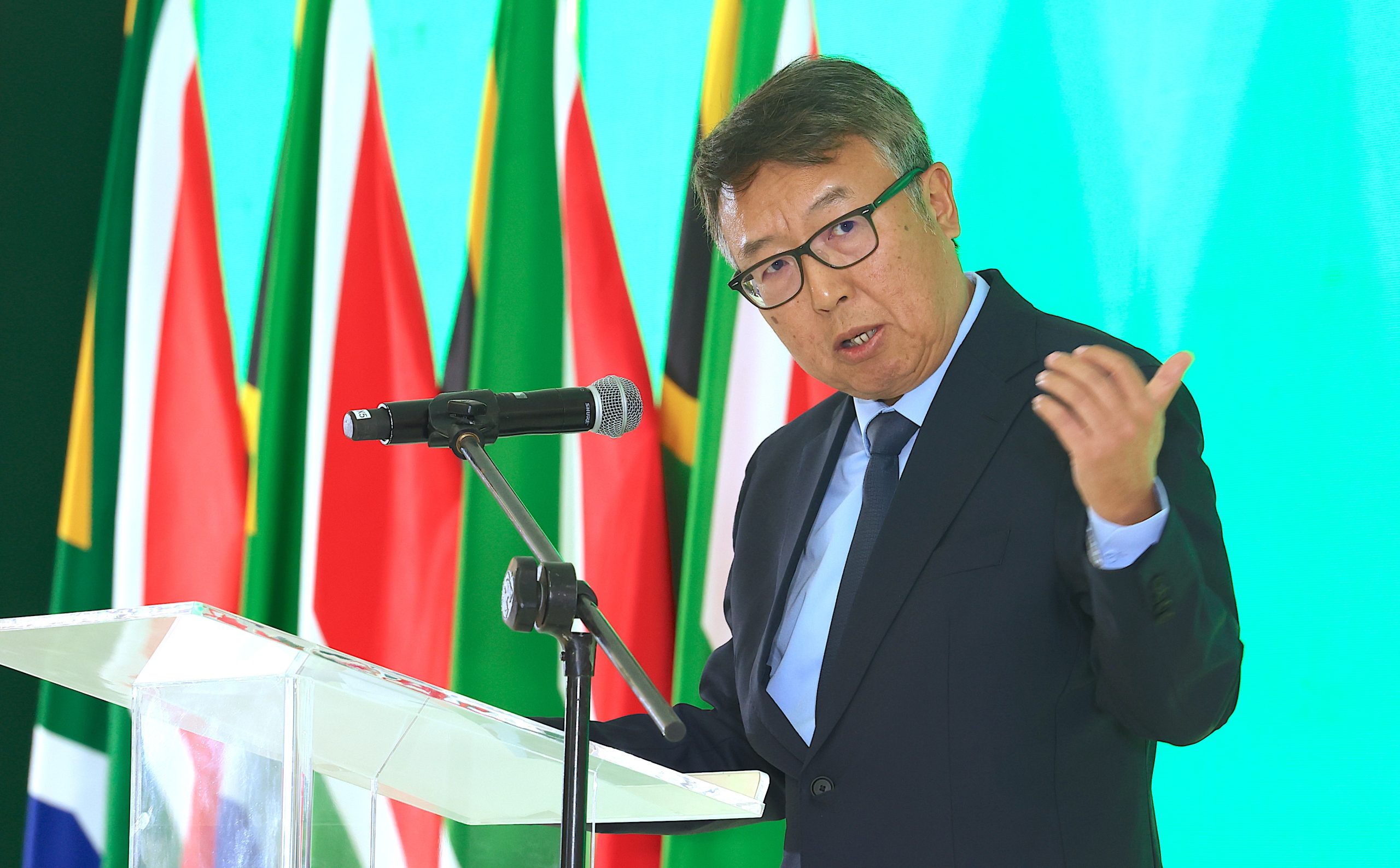
Goldwind Vice Chairman and CEO Cao Zhigang, speaking at the launch, expressed the company’s gratitude to Seriti for the partnership and to the South African government for its leadership. “Under the leadership of President Ramaphosa, South Africa has continued to advance its energy transition with determination and vision,” Cao said. “This project reflects the country’s strong commitment to energy security, sustainable economic growth, and a cleaner future”.
Cao emphasized Goldwind’s long-term commitment, noting that with more than 220 local employees, Goldwind Africa will serve as a regional centre not only for South Africa but also for other African countries as a technical and operations hub. He shared an old Chinese saying: “志合者,不以山海为远” — “When people share the same vision, no distance is too far”.
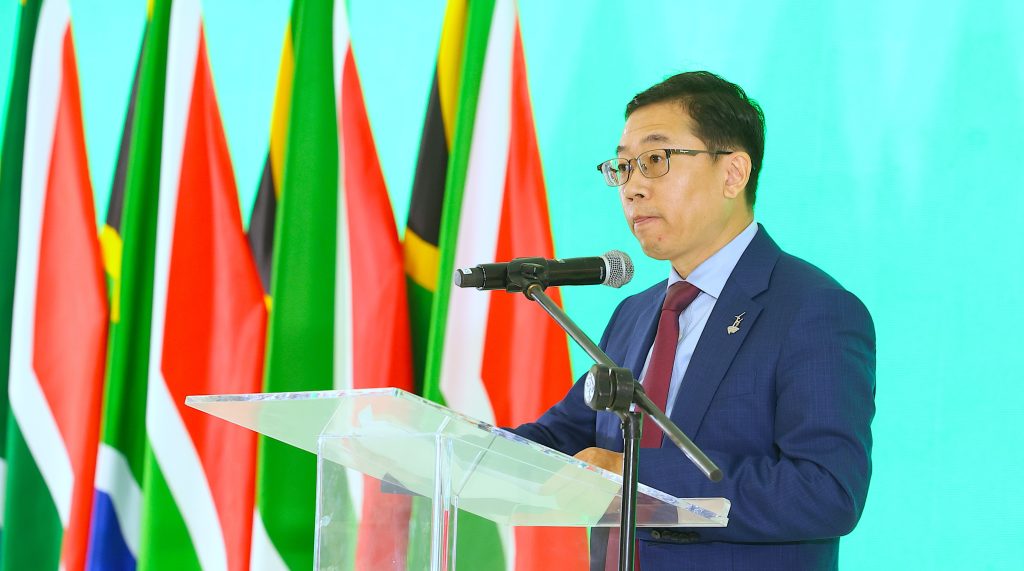
Chinese Ambassador to South Africa Wu Peng, addressing the ceremony, noted that “Ummbila Emoyeni” means “maize in the wind” in isiZulu, describing the project as “energy in the wind, and hope in the wind”. He cited the De Aar Wind Power Project in the Northern Cape and other successful projects as evidence that “Chinese enterprises are not merely ‘visitors from afar,’ but ‘partners deeply rooted here'”.
Ambassador Wu highlighted the broader economic cooperation between the two nations, noting that since 1 May 2026, China has officially implemented zero-tariff treatment for all African countries having diplomatic relations with China. Within months, the policy has delivered encouraging results: in May 2026, South Africa exported nearly 5,500 metric tons of apples to China, an increase of 181 percent year-on-year; in June, South Africa’s agricultural exports to China reached US$83 million, up 120 percent year-on-year.
The Ambassador emphasized that Chinese enterprises “bring not only capital and technology, but also tangible commitments to South African workers, communities, and the future”. He cited a growing presence of Chinese companies across South Africa’s economy, from automotive manufacturing to mining, electronics to cement, and now renewable energy.
Cao further said the project demonstrates how Chinese technology and local partnerships can help advance South Africa’s energy transition. “Goldwind is committed to expanding its presence in South Africa by investing in more renewable energy and energy transition projects in the years ahead,” he said.
The project represents a significant milestone in the bilateral relationship, translating high-level political commitments into tangible infrastructure that delivers clean energy, creates jobs and builds local capacity. As Ambassador Wu concluded: “May China and South Africa move forward hand in hand”.
