


By Frans Sello waga Machate | Pretoria, South Africa
PRETORIA – The Chinese government has reaffirmed its commitment to supporting Chinese enterprises expanding into Africa through local manufacturing, describing Chery International’s acquisition of the Rosslyn automotive plant as a milestone that strengthens South Africa’s industrialization agenda while deepening bilateral economic cooperation.
Speaking during the official launch of Chery International Manufacturing Factory in Rosslyn, Tshwane on Friday, Chinese Ambassador to South Africa H.E. Wu Peng said Beijing would continue encouraging Chinese companies to establish long-term operations in South Africa that create jobs, transfer technology and contribute to local economic development.
The Rosslyn facility, one of South Africa’s oldest automotive manufacturing plants previously owned by Nissan, marks Chery’s transition from a vehicle importer to a local manufacturer and positions the Chinese automaker to use South Africa as a strategic production hub for both the domestic market and the wider African continent.
“For both viability and long-term vision, the Chinese government will continue to encourage and support Chinese enterprises to go local and fulfil social responsibilities in South Africa,” Ambassador Wu told government leaders, industry executives and diplomats gathered at the historic plant. He further urged Chinese companies operating in South Africa to “establish deep roots in the local market, actively integrate into local communities, nurture local talent, drive local industrial upgrading and local job creation, help improve people’s well-being, and contribute more to South Africa’s economic and social development.”
The ambassador’s remarks signal Beijing’s broader policy direction of supporting Chinese manufacturers to establish production capacity closer to overseas markets, particularly in Africa, rather than relying solely on exports from China.
Wu described the Rosslyn investment as the convergence of two important industrial histories; a manufacturing facility that has been part of South Africa’s automotive industry for nearly seven decades and one of China’s leading automotive brands that has grown from domestic innovation into a global manufacturer. He said the partnership represented more than a commercial transaction, calling it “a vivid testament to the deepening cooperation between China and South Africa” that would inject fresh momentum into bilateral cooperation in the automotive sector while creating new opportunities for future development.
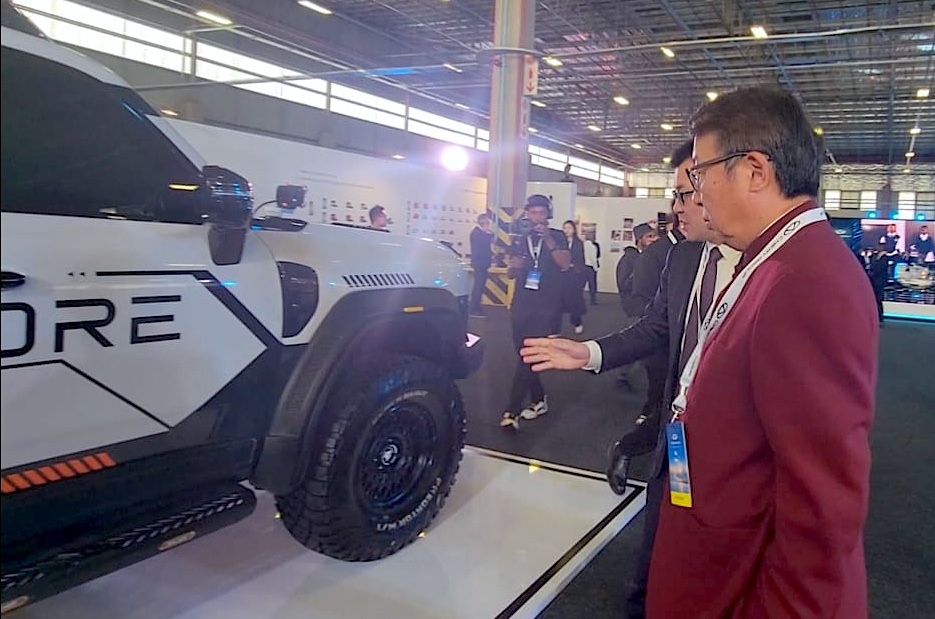
The investment also reflects China’s growing emphasis on supporting industrial partnerships under its expanding economic engagement with Africa.
Ambassador Wu linked the investment to President Xi Jinping’s vision that China’s development is interconnected with global prosperity, noting that China had, from 1 May 2026, implemented a zero-tariff policy for all African countries maintaining diplomatic relations with Beijing. According to Wu, the new trade arrangement creates additional growth opportunities for African economies, including South Africa, and is expected to facilitate increased exports of South African-manufactured vehicles and automotive components into the Chinese market.
The launch comes as South Africa seeks to position itself as Africa’s leading automotive manufacturing destination through the African Continental Free Trade Area (AfCFTA) while attracting greater foreign direct investment into value-added manufacturing.
Deputy President Paul Mashatile said the Chery investment demonstrated international confidence in South Africa’s industrial future and reinforced the country’s role as “the automotive gateway to Africa.” He said government viewed the Rosslyn acquisition as a significant vote of confidence in South Africa’s institutions, infrastructure and long-term economic prospects.
Mashatile said the investment aligns with government’s objective of expanding domestic manufacturing capacity while ensuring industrialization benefits surrounding communities through employment creation, supplier development and skills transfer.
He called on Chery to work closely with government in identifying and developing local suppliers, particularly youth-owned enterprises, arguing that meaningful localization extends beyond vehicle assembly to include the development of competitive domestic supply chains capable of supporting long-term industrial growth.
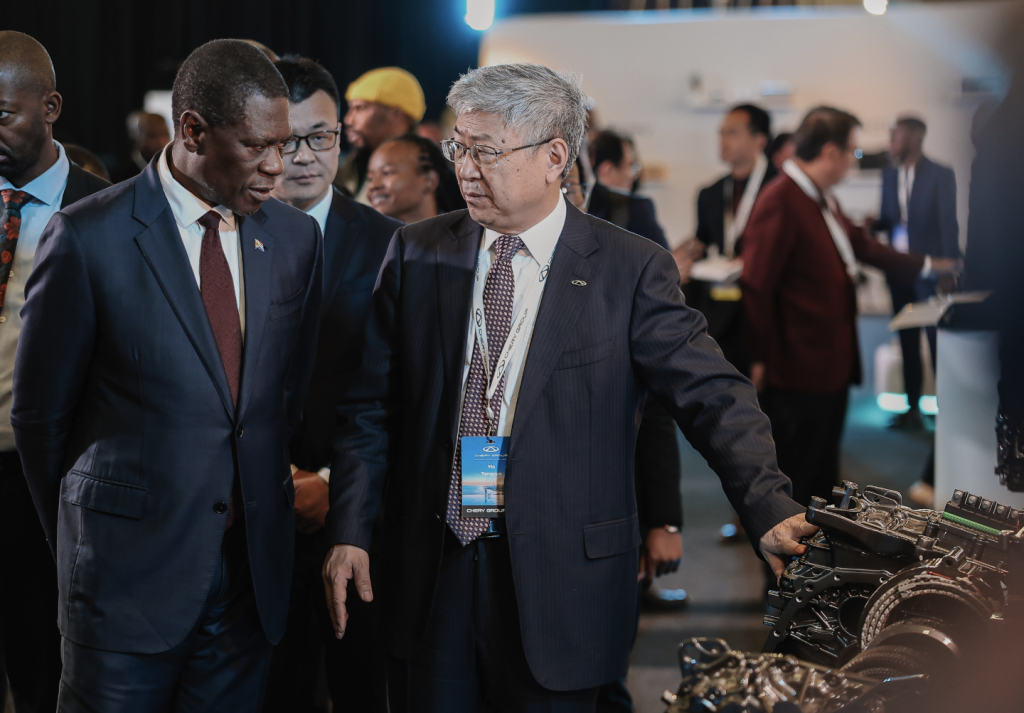
The Deputy President also emphasized that South Africa’s Automotive Master Plan seeks to increase domestic vehicle production, raise local content levels, expand employment and prepare the country for the transition towards New Energy Vehicles (NEVs), objectives that Chery’s investment could help advance.
The Rosslyn project forms part of Chery International’s broader global manufacturing strategy as the company expands production capacity outside China to serve regional markets more efficiently while increasing localization.
The company plans to modernize the Rosslyn facility before commencing vehicle production, with local assembly expected to strengthen South Africa’s automotive value chain through supplier development, technology transfer and workforce skills development. Previous company announcements indicate that the factory will retain the 692 existing workforce from Nissan while supporting about 2300 additional direct and indirect employment opportunities as production expands.
For both Pretoria and Beijing, the Rosslyn investment represents more than the establishment of another automotive factory. It reflects a shared strategy of combining industrial investment, technology cooperation and expanded market access to strengthen South Africa’s manufacturing competitiveness while positioning the country as a strategic production base for Chinese automotive brands serving the African continent.
As Chinese manufacturers increasingly establish production facilities across Africa, Chery’s Rosslyn plant is expected to serve as one of the most significant examples of China’s evolving investment model; one that places greater emphasis on local manufacturing, industrial partnerships and long-term participation in African economic development rather than conventional export-led trade.
