

By Frans Sello waga Machate I Durban, South Africa
DURBAN – As South Africa’s official conservation authority returns to Africa’s Travel Indaba, its leadership told journalists on Tuesday that national parks must move beyond “fortress conservation” to become engines of inclusive growth and that the continent’s travel trade show provides an unmatched platform to showcase a transformed, community-centered model of eco-tourism.
Speaking on the sidelines of the annual event at the Inkosi Albert Luthuli International Convention Centre, SANParks executives outlined a bold Vision 2040 strategy that prioritises economic inclusion, job creation through small enterprises and the strengthening of partnerships with local communities living adjacent to the country’s iconic parks.
The media briefing followed few hours after President Cyril Ramaphosa officially opened Africa’s Travel Indaba 2026, telling more than 1,200 exhibitors and 1,000 buyers that the nation’s tourism figures are no longer in a recovery phase but in one of sustained growth. With a record-breaking 10.5 million international arrivals recorded in 2025, South Africa’s national parks have emerged as central pillars of that momentum.
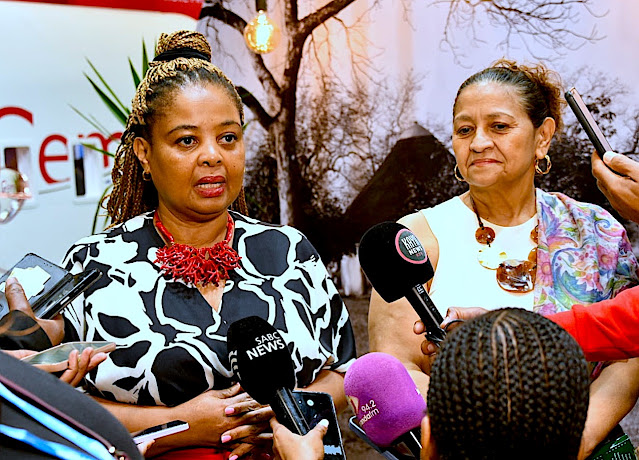
The SANParks leadership led by Interim Board Chairperson Ms. Beryl Ferguson stressed that the protected areas under the entity’s management including the Kruger National Park, Table Mountain National Park and Addo Elephant National Park are not only biodiversity strongholds but also key destinations that drive local economies. The agency oversees conservation across more than 20 national parks, but its mandate has evolved to place greater emphasis on community development and broad-based participation.
According to SANParks, the shift is encapsulated in the Vision 2040 framework; moving away from a model of “fortress conservation,” where communities were often sidelined, toward genuine collaboration in which local businesses, entrepreneurs and traditional authorities become active partners in both conservation and tourism value chains.
This year, the parks authority has backed that commitment with practical action. Officials confirmed that 15 SANParks-supported small, medium and micro enterprises (SMMEs) are exhibiting at Africa’s Travel Indaba as part of a dedicated high-quality exhibition stand designed to enhance market access and visibility for black-owned and community-based operators. The initiative is part of SANParks’ broader enterprise development and tourism transformation strategy, and represents the latest step in a multi-year effort to embed small-scale local operators into the formal tourism economy.
SANParks executives highlighted several major projects that demonstrate how park infrastructure investment is translating into community jobs and expanded access.
Just last month, at Africa’s southernmost tip, Cape Agulhas; SANParks handed over the R81.7‑million upgraded Agulhas Lighthouse Precinct in partnership with the Department of Tourism. Underlining the agency’s inclusive conservation ethos, officials told journalists that more than 117 community members from Agulhas, Struisbaai and Bredasdorp directly benefited from employment and training opportunities during the project. The precinct now features a 60‑seater restaurant, an interpretation centre and upgraded visitor facilities, and is intended to attract both domestic and international visitors to a region often overshadowed by more famous parks.
Another milestone highlighted during the briefing was the R120‑million Kgodumodumo Dinosaur Interpretation Centre in Golden Gate Highlands National Park, launched last year. Since opening, nearly 90,000 visitors have toured the centre, where the world’s oldest dinosaur embryo, dating back 200 million years it was discovered. According to SANParks, such projects serve a dual purpose of protecting paleontological heritage while creating sustainable jobs and drawing new visitor demographics into less-trafficked national parks.
SANParks management pointed to the sharp rise in nature-based tourism as a major driver of employment. Nationally, tourism accounted for 954,000 direct jobs by 2024, contributing 4.9% to GDP, according to Statistics South Africa figures cited earlier in the week by Tourism Minister Patricia de Lille. A substantial portion of that footprint lies inside or adjacent to national parks.
The agency noted that in 2025 alone, visitor numbers to flagship parks continued to climb, with occupancy rates in rest camps and adjacent private lodges frequently reaching full capacity during peak seasons. SANParks said it is also actively working to diversify the visitor profile, with targeted marketing campaigns aimed at growing domestic tourism and attracting first-time African travellers.
During the media briefing, SANParks Chief Executive Officer, Ms. Hapiloe Sello endorsed President Ramaphosa’s call for expanded regional integration and easier travel across SADC borders. The president told Indaba delegates that South Africa is working with its neighbours to advance the SADC Tourism UNIVISA, a single-visa regime designed to allow seamless, borderless travel for tourists across member states.
“When Africans travel within Africa, we strengthen our economies, deepen our cultural ties and build a more integrated continent,” Ramaphosa said on Tuesday.
SANParks sees cross-border itineraries as a natural extension of its offering, particularly in the Kruger National Park area, where wildlife tourism flows across the borders into Mozambique and Zimbabwe.
Looking ahead, Tourism Minister De Lille announced during the opening ceremony that Africa’s Travel Indaba itself will undergo a revamp, with organisers calling for sponsors and partners to join a new journey from 2027 onward. SANParks CEO welcomed that move, noting that the event owned by South African Tourism and widely regarded as one of the top three travel trade shows globally, must evolve alongside the sector it represents.
The 2026 edition of the Indaba is expected to generate significant economic spin-offs for Durban, following a 2025 edition that contributed R610.6 million to South Africa’s GDP and supported more than 1,100 jobs. According to organisers, hotel occupancy in the city during the event reached 97% last year, underscoring the value of large-scale tourism exhibitions.
For SANParks, the priority is ensuring that a growing share of that economic activity flows back into the communities that live alongside and act as custodians of the country’s natural heritage.
“Conservation without inclusion is not sustainable,” Ms. Sello told journalists. “The Indaba gives us a global stage to show that when parks thrive, communities must thrive with them.”
Africa’s Travel Indaba 2026 continues at the Inkosi Albert Luthuli International Convention Centre until 14 May. The SANParks exhibition stand will remain open for the duration of the event, hosting business-to-business meetings and showcasing the 15 SMMEs currently participating under the agency’s market-access programme.
