

SA Launches Massive Repatriation of Liberation Heroes from Angola
By Frans Sello waga Machate I Pretoria, South Africa
PRETORIA — In what has been described as the most ambitious chapter of South Africa’s post-apartheid restitution project, the government this morning launched the second phase of its Exile Repatriation Programme, aimed at recovering and returning the remains of hundreds of freedom fighters who died in Angola during the liberation struggle.
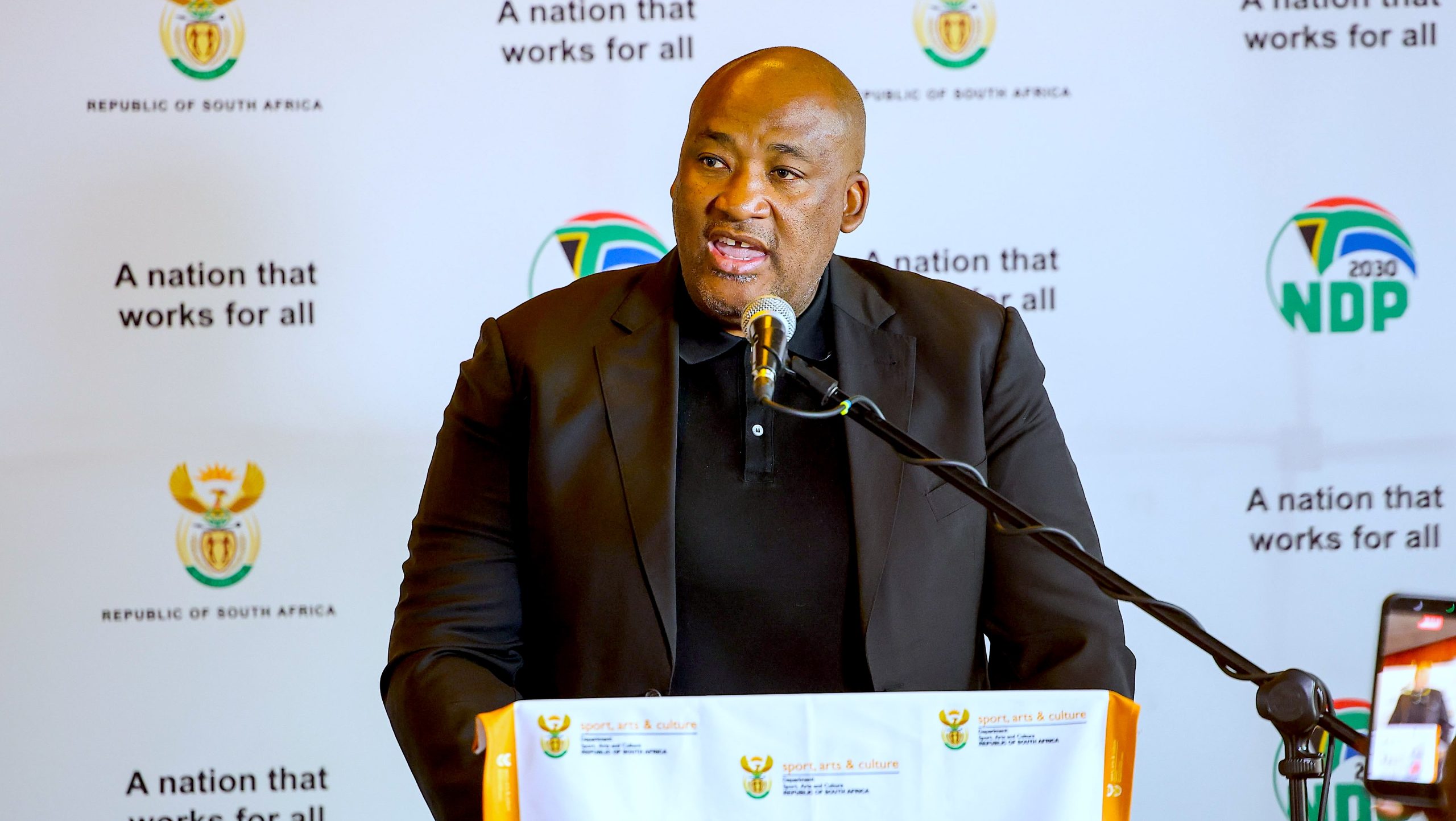
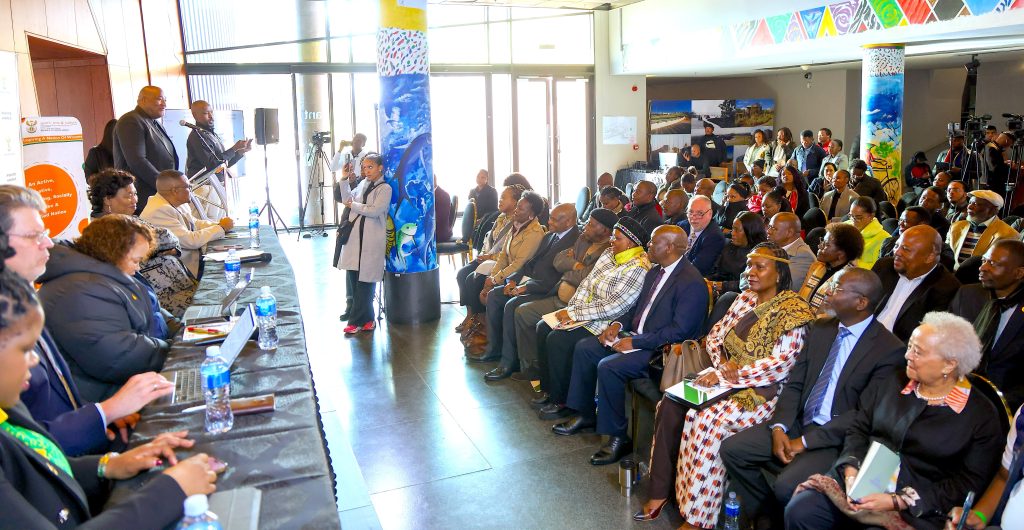
Addressing a media briefing at Freedom Park in Pretoria, Minister of Sport, Arts and Culture Gayton McKenzie delivered a stark and emotional appeal to families who have waited decades for answers.
“There is a woman in this country who was a girl when her brother walked out of the family home. She was told he had gone to study. She never saw him again. She does not know the country he died in, let alone the ground he lies in. She has never put a stone on a grave, or swept one, or spoken to him there,” McKenzie said.
“Forty or fifty years later she is an old woman, and she is still waiting. There are hundreds of families like hers. We are here today to tell them that the waiting is coming to an end,” he said.
McKenzie was joined by Minister of Defence and Military Veterans Angie Motshekga, Deputy Minister of Justice and Constitutional Development Andries Nel, and African National Congress Secretary-General Fikile Mbalula at the briefing, which marked a significant milestone in government’s efforts to implement the recommendations of the Truth and Reconciliation Commission.
The programme, which follows the successful repatriation of 42 liberation struggle veterans from Zambia and Zimbabwe in September 2024, now turns its focus to Angola; the country that holds the largest known concentration of South Africans who died in exile.
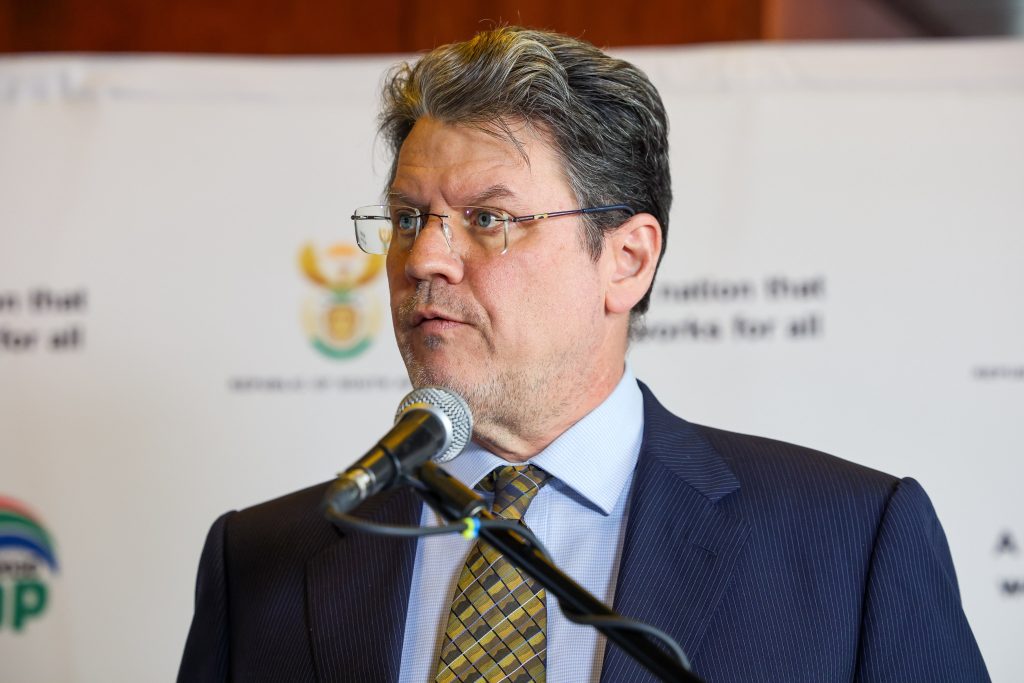
According to Deputy Minister Nel, available records indicate that between 300 and 400 combatants of Umkhonto we Sizwe (MK) died in Angola between 1976 and 1992. The deaths occurred across four principal areas: Luanda and its surroundings; the Eastern Front, including Malanje, Caculama, Quela, Cacuso, Lombe and Camalundi; the Northern Front, including Quibaxe, Pango, Camp 32 and battle sites; and the Southern Area around Nova Catenque and Benguela.
However, officials cautioned that the recovery operation faces formidable challenges. Burial conditions in Angola are more varied and complex than those encountered in earlier country projects. Sites include municipal and village cemeteries, former ANC training camps, battle sites and informal field graves.
“Some municipal graves are recycled at five-year intervals. Burial records are limited or unavailable in certain areas. Former training camps have become overgrown, and burial areas are no longer visible without extensive bush clearing. Some camps and burial areas were mined and will require demining before grave mapping or excavation can take place. In certain cases, graves were concealed to prevent interference by hostile forces,” Nel explained.
These factors mean that it is unlikely that all those who died in Angola will be recovered. Current assessments indicate that between 30 and 50 per cent of the deceased may be recoverable.
A preliminary mission to Angola was undertaken in 2025 to conduct grave mapping, during which the Technical Team identified 89 potential graves for excavation. This is an initial figure and does not include all possible burials at former ANC camps. Further investigations are expected to identify additional sites.
Subject to approvals by the Angolan authorities, the Technical Team is scheduled to undertake excavations and exhumations during September or October 2026. The planned sites include three cemeteries in Luanda; Malanje town, Quela village and a field site in Cacuso in the Eastern Front; and Caxito Camp and eight graves at the entrance to Pango in the Northern Front.
Minister Motshekga emphasized that every recovery mission requires careful planning, scientific expertise and close cooperation with Angolan authorities and local communities. “In some instances, despite extensive investigations and exhaustive searches, physical remains may not be recovered. This reality is painful, but it does not diminish the value of the sacrifice made by those who died in exile,” she said.
For families whose loved ones cannot be located or recovered, the government has committed to facilitating spiritual repatriation, the practice of returning the spirit where the body cannot be returned, conducted at the site or in the region where the person died, according to the family’s own beliefs and rituals.
A key outcome of the briefing was a public call for families to come forward and register with the South African Heritage Resources Agency (SAHRA). McKenzie stressed that the programme is open to all South Africans whose relatives died in exile, regardless of political affiliation.
“This is a programme of the Government of the Republic of South Africa, and it includes the fallen from other organizations and situations. It is open to every South African family, without exception, without regard to which movement their loved one served, and without regard to the circumstances in which they died. We do not ask a mother to justify her grief. If your child died in exile, and we can bring your child home, your child is coming home,” McKenzie declared.
Families may apply online, by telephone, or in person at SAHRA offices, Freedom Park, provincial DSAC offices, and through veterans’ structures. McKenzie emphasized that the process is entirely free of charge. “Government will never ask you for payment, and nobody is authorized to charge you a fee to lodge an application. If a person asks you for money to bring your child home, that person is stealing from you. Report them,” he warned.
Nothing proceeds without consent, exhumation, forensic investigation, verification and repatriation happen only where the family has agreed.
The repatriation programme gives effect to the Memorandum of Understanding signed by the Governments of South Africa and Angola in December 2024 under the Roads to Independence - African Liberation Heritage Programme. It is aimed at tracing, recovering and returning the remains of South Africans who never made it home after sacrificing their lives for the country’s freedom.
McKenzie traced the origins of the programme to November 2019, when military veterans approached President Cyril Ramaphosa and asked that their comrades who perished in exile be brought home. The President established a Presidential Task Team to respond, and government was inundated with requests.
The Department of Sport, Arts and Culture led the development of the National Policy on the Repatriation and Restitution of Human Remains and Heritage Objects, adopted in 2021. In 2023, Cabinet approved a Country-to-Country Repatriation Model and Implementation Plan. In March 2026, Cabinet approved a Five-Year Plan for the Exile Repatriation of Human Remains.
The work sits within the Resistance and Liberation Heritage Route Project, South Africa’s national chapter of the African Liberation Heritage Programme, recognized by UNESCO in 2005 and adopted by the African Union in 2011.
“A country that leaves its dead in foreign soil has not finished the work of becoming free. Bringing them home is not ceremony, it is the completion of a citizenship that was interrupted,” McKenzie said.
