
By Frans Sello waga Machate I Pretoria, South Africa
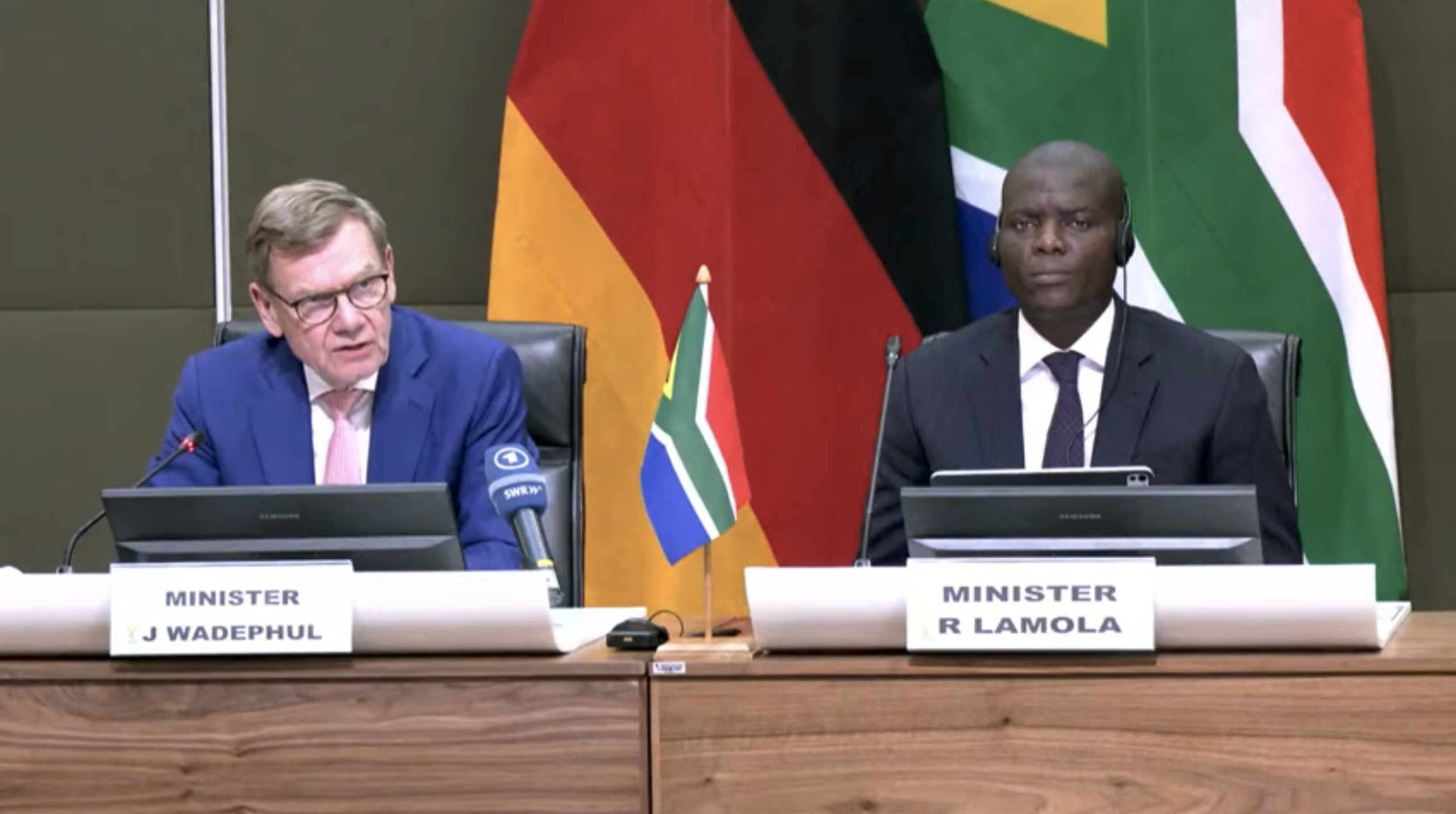
PRETORIA — South Africa and Germany have reaffirmed their commitment to strengthening their newly elevated Strategic Partnership, with discussions between Minister of International Relations and Cooperation Ronald Lamola and German Federal Foreign Minister Dr Johann Wadephul focusing on expanding economic cooperation, accelerating the Just Energy Transition and addressing pressing global conflicts.
The German minister’s working visit to South Africa on 22 and 23 July 2026 included a tête-à-tête on Thursday morning before the two ministers convened official bilateral talks at the Department of International Relations and Cooperation (DIRCO) in Pretoria.
The visit follows the 12th Meeting of the South Africa-Germany Bi-National Commission (BNC), held in Berlin in April 2026, which marked 30 years of the mechanism and saw both countries elevate their relationship to a Strategic Partnership. The two countries also adopted a Joint Action Plan aimed at translating the enhanced partnership into practical areas of cooperation.
Lamola said the latest discussions were aimed at reviewing progress in implementing the Action Plan and identifying areas where cooperation should be accelerated.
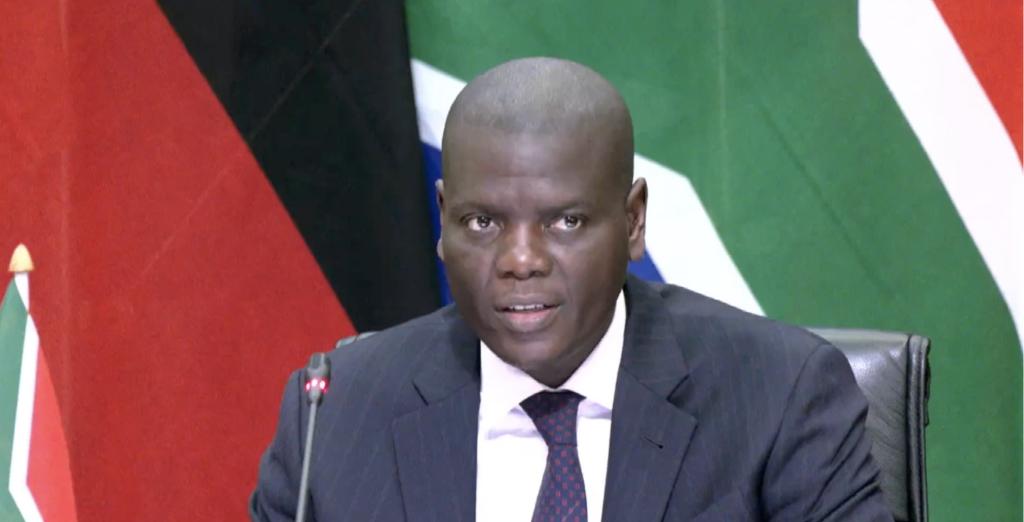
“I am pleased to report that our engagement was frank, warm and productive. We reviewed implementation across the Action Plan, took stock of the progress made and agreed on the areas in which we must move faster,” Lamola told reporters at the DIRCO Media Briefing Room.
The Bi-National Commission, established in 1996 following President Nelson Mandela’s State Visit to Germany, remains the central instrument for managing the relationship and comprises eight senior official-level working groups.
Germany is South Africa’s largest trading partner in Europe, with bilateral trade valued at approximately R295 billion in 2025. More than 600 German companies operate in South Africa, employing approximately 100 000 people. Germany is also among the country’s most significant sources of foreign direct investment and its third largest source of overseas tourists.
Lamola said economic cooperation formed a key part of the discussions, particularly around expanding trade and investment, cooperation on critical raw materials and developing a battery value chain that supports industrialisation and job creation in South Africa.
“We discussed the expansion of trade and investment, cooperation on critical raw materials, and the development of a battery value chain that creates value and jobs here in South Africa,” Lamola said.
The ministers also discussed cooperation under the Just Energy Transition Partnership, which supports South Africa’s shift towards cleaner energy while ensuring social and economic considerations are addressed.
“We also discussed the Just Energy Transition Partnership, which supports our shift towards cleaner energy in a manner that is socially just, as well as our long-standing cooperation on vocational education and training. This cooperation speaks directly to the urgent challenge of youth employment,” Lamola said.
Both sides agreed to institutionalise regular high-level political dialogue between their foreign ministries.
“Our intention is to ensure that engagement of this kind becomes a standing feature of our partnership, rather than an occasional event,” Lamola said.
The ministers further agreed to advance practical cooperation on strengthening democratic resilience, including through efforts to counter disinformation; an area in which both societies face similar pressures.
Beyond bilateral matters, the talks covered major international developments, including peace and security challenges on the African continent; particularly the situation in eastern Democratic Republic of the Congo, the war in Ukraine and the humanitarian crisis in the Middle East.
On the Middle East, Lamola reiterated South Africa’s position, calling for the implementation of the ceasefire, unimpeded humanitarian access and a political solution based on international law.
“We remain gravely concerned about the humanitarian situation in Gaza. We call for the full implementation of the ceasefire, unimpeded humanitarian access, and a credible political process leading to a two-state solution, with a viable Palestinian state existing alongside a secure Israel. Our approach is grounded in international law and the United Nations Charter,” Lamola said.
Lamola acknowledged that South Africa and Germany do not share identical views on all aspects of the Middle East question.
“South Africa and Germany do not view every aspect of this question in the same way. It is precisely because of the strength of our partnership that we are able to discuss our differences openly and in good faith. I welcomed the candour of our exchange.”
Respect for international law was a central theme of the discussions. Lamola emphasised that the application of international law must be consistent and free from selective interpretation.
“International law must be principled, consistent and predictable. There must be no double standards in the application of international law. International law must be applicable across the board,” Lamola said.
Wadephul addressed the war in Ukraine, noting that Ukrainians have endured more than four years without peace and freedom.
“So it is good news that at the EU we agreed on the 21st package of sanctions which, like all of the other packages has only one goal: to reduce Russia’s ability to finance its war so that they finally realise that the time has come to end this war and to engage in serious negotiations without preconditions,” Wadephul said.
As Chair of the Southern African Development Community (SADC), and ahead of the summit that South Africa will host next month in Durban, Lamola briefed Wadephul on regional priorities including industrialisation, agricultural transformation and the energy transition, alongside support for African-led efforts to secure peace and stability in the region.
Lamola also expressed South Africa’s appreciation for Germany’s principled support for an inclusive G20.
“South Africa was proud to host the first G20 Summit on African soil last year. We will continue to defend the inclusivity and integrity of that forum,” Lamola said.
Wadephul reflected on the geographic distance between the two nations while expressing his warm reception in South Africa.
“Ronald, the key for where I live and come from and the Cape of Good Hope lie 10,000 km apart. I can tell you that I already feel very much indeed at home here. Sunshine and the nearly 3,000 km of coastline, which I will definitely would like to enjoy the next time I come, make your country a dream destination for hundreds of thousands of Germans. And now for me, too.”
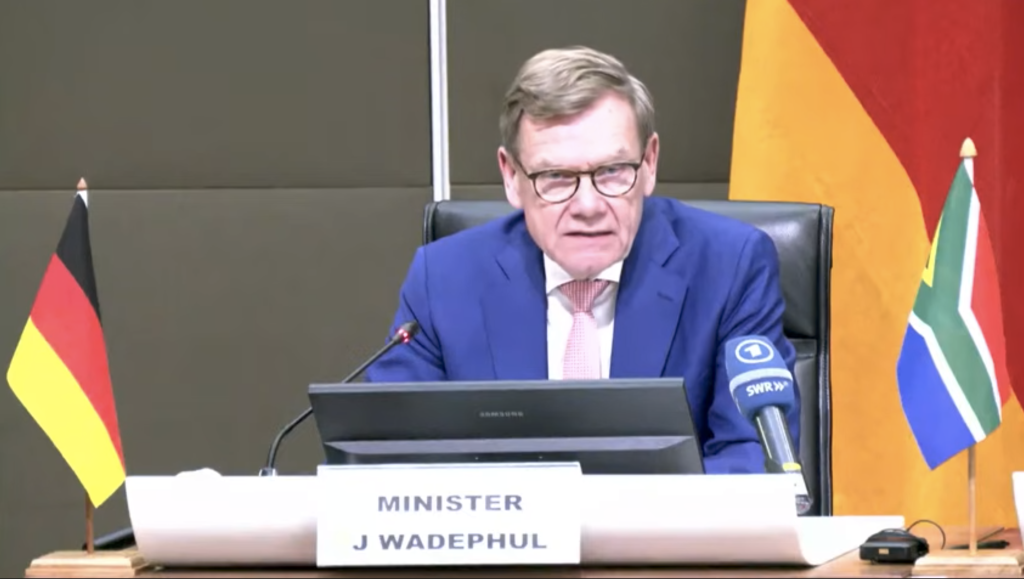
“I look forward to working with you on maintaining and further deepening the German-South African relationship going forward,” Wadephul said.The working visit underscores the depth of a bilateral relationship anchored in shared democratic values, extensive economic ties and a common commitment to multilateralism; a partnership that, after three decades of the Bi-National Commission, has now entered a new chapter as a Strategic Partnership.
