

By Frans Sello waga Machate I New York, United Nations Headquarters, USA
NEW YORK – A powerful chorus of international voices condemned Israel’s ongoing military offensive in Gaza and demanded an immediate and enforceable ceasefire during the second day of the High-Level International Conference on Palestine, with leaders accusing Israel of flouting international law and committing acts of genocide that have “plagued the world’s collective conscience for 80 years.”
The conference, convened pursuant to General Assembly Resolution 79/81, transformed the UN hall into a platform for scathing indictments of the occupation and urgent calls for the tangible implementation of a two-state solution.
Echoing the UN Secretary-General, António Guterres’ opening remarks, where he stressed that “there is no security in occupation” and rejected the “false choice between Palestinian statehood and Israeli security,” speakers from South Africa and China led the charge in demanding that the dialogue translate into immediate action.
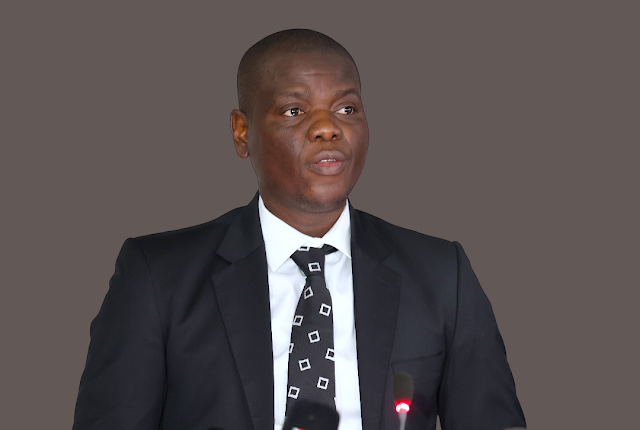
South African Minister of International Relations and Cooperation, Ronald Lamola, delivered a blistering critique, framing the crisis in Gaza as a fundamental failure of the international system.
“This Conference takes place at a time when we are witnessing the destruction of Gaza and its people in real time, in a brazen and wanton act of genocide in full view of the world,” Lamola stated. He condemned the October 7th attacks but argued that the international legal order has been “paralyzed and turned into a blunt tool,” allowing a “might is right” doctrine to prevail.
Lamola outlined a clear path forward, demanding that all states immediately recognize Palestinian statehood and that the UN Security Council finally act to protect the Palestinian people. “There cannot be peace while the very existence of the Palestinian people is being threatened,” he underscored.
He issued a stark warning against recent Israeli moves to annex the West Bank, stating it “could effectively bury the Two-State solution.” His prescription was unequivocal: the “immediate and full implementation” of UN resolutions and International Court of Justice (ICJ) rulings, asserting that “not only Israel, but all States, must comply with our collective obligations under international law.”
China’s Special Envoy on the Middle East, Jun Zhai, echoed the urgent call for a ceasefire, describing a Gaza reduced to “rubble and ruins” amidst the “worst humanitarian catastrophe of the 21st century.”
“The international community must not only sit down for solution but also stand up for action,” Zhai declared, outlining a five-point proposal. He firmly rejected any alteration of Gaza’s status or encroachment on the West Bank, stating, “Any force, will bring no peace, but only new chaos.”
Zhai reaffirmed China’s firm support for Palestine becoming a full UN member state and called on all nations that haven’t done so to recognize it without delay. He highlighted China’s own diplomatic efforts, including hosting Palestinian factions for reconciliation talks last year, and pledged China’s contribution to Gaza’s reconstruction.
Crucially, he framed security as a collective issue, stating, “Unilateral security approaches are untenable. Only common security can guarantee lasting peace.” He affirmed that while Israel’s legitimate security concerns should be respected, “Palestine’s rights to existence, statehood and development must also be realized.”
The forceful statements from South Africa and China, two influential voices from the Global South, highlight a converging international consensus that extends beyond traditional geopolitics. Their demands align with the UN Secretary-General’s plea for responsible leadership to create the conditions for peace, rather than waiting for them.
The conference, intended to move beyond rhetoric and create an “irreversible pathway” towards a two-state solution, now faces the immense challenge of translating this unified condemnation into the concrete, enforceable action that a desperate Gaza and a disillusioned international community are demanding.
