

By Frans Sello waga Machate | Shanghai, China
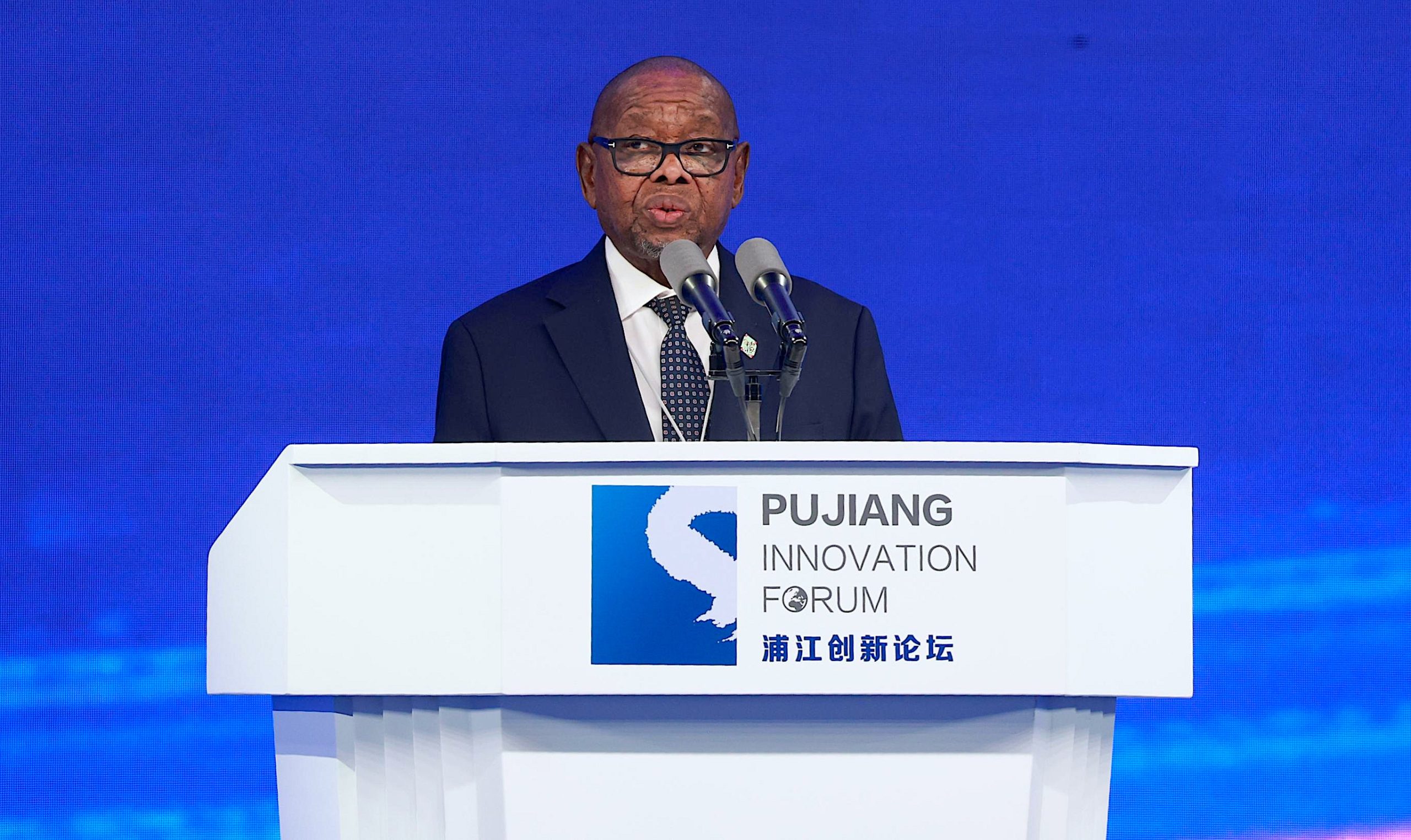
SHANGHAI, China — South Africa has called for a stronger and more equitable role for the Global South in shaping the next generation of scientific and technological development, with Minister of Science, Technology and Innovation Professor Blade Nzimande urging developing nations to move beyond being consumers of technologies created elsewhere.
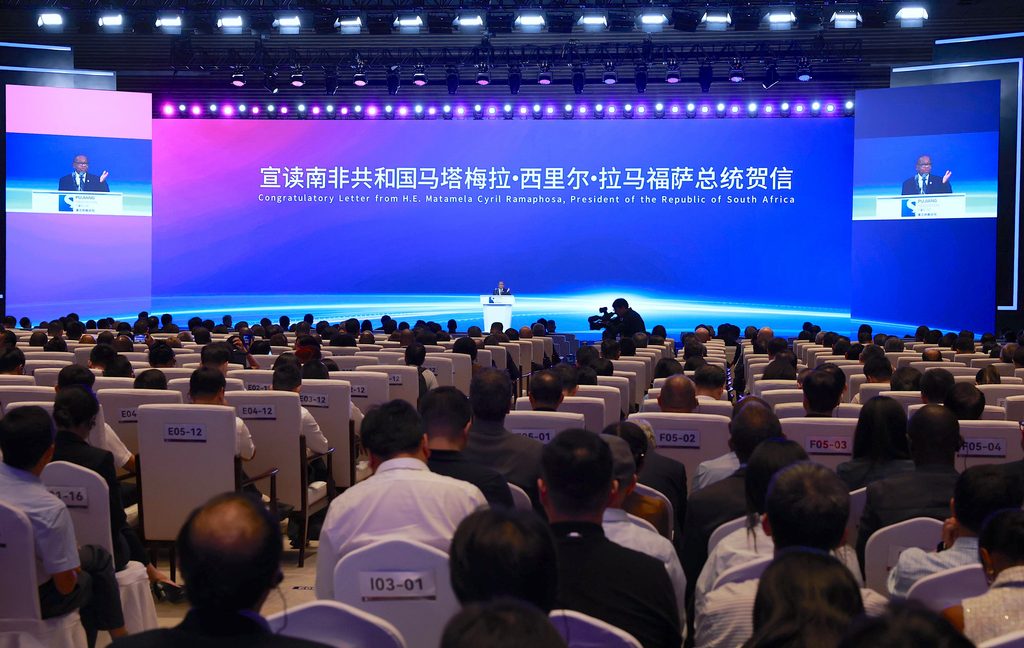
Delivering the keynote address at the official opening of the 19th Pujiang Innovation Forum at Zhangjiang Science Hall in Shanghai on Saturday, 12 September 2026, Nzimande said the rapid emergence of artificial intelligence (AI), quantum technologies, biotechnology, space science, advanced materials and clean technologies was fundamentally changing how nations produce, compete, govern and secure their futures.
His address came under the forum's theme, “Sharing Innovation and Shaping the Future: The Mission of the Global Sci-Tech Community Amid a New Round of Sci-Tech Revolution.”
Nzimande argued that the scale of technological change, coupled with growing geopolitical and economic uncertainty, required the Global South to play a more active role in determining the direction of scientific and industrial development.
“This is also a moment of profound geopolitical and economic uncertainty, where science, technology and innovation are being increasingly weaponised by certain nation states,” Nzimande said.
His remarks placed technological capability, ownership and access at the centre of the development debate, highlighting the need for developing countries to strengthen their domestic innovation ecosystems while building international partnerships.
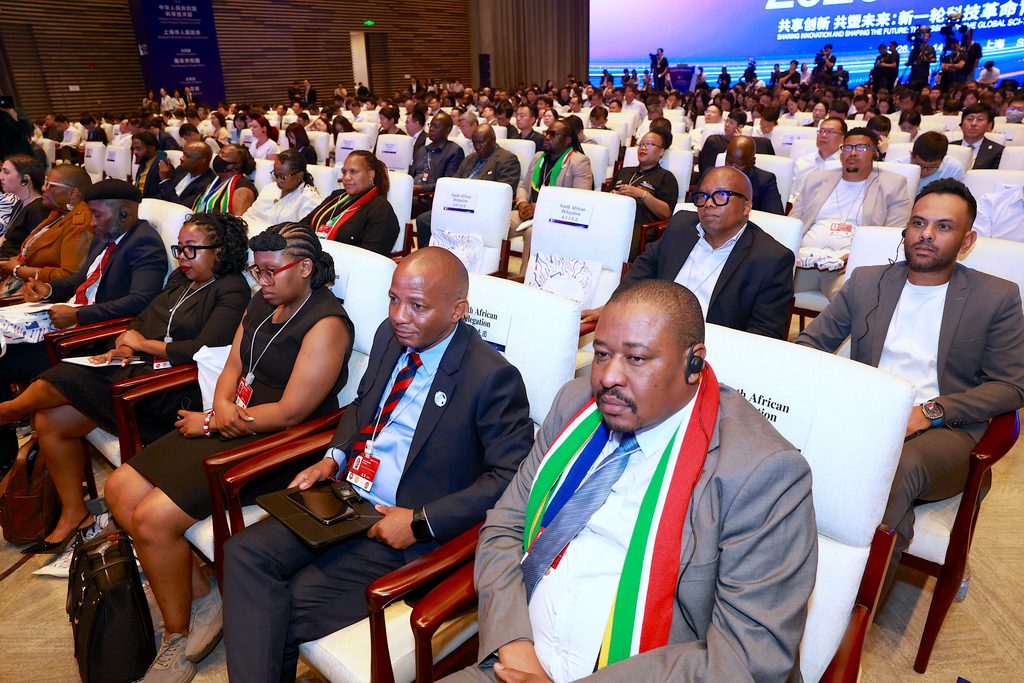
Nzimande said South Africa's participation in the Shanghai forum was closely linked to the country's broader transformation of its science and innovation system since the advent of democracy in 1994.
He pointed to South Africa's capabilities in astronomy and space science, citing the MeerKAT and Square Kilometre Array projects as examples of Africa's ability to host, design and operate major scientific infrastructure of global significance.
He also highlighted cooperation between the South African National Space Agency and China's national space agency in areas including Earth observation, disaster management, ocean monitoring and data systems.
In the health sector, Nzimande said South African scientists had made significant contributions to genomics, epidemiology, vaccine science and medical technologies designed for underserved communities.
The country's progress in vaccine manufacturing, local biologics and the mRNA technology transfer hub established with the World Health Organisation, he said, reflected a lesson reinforced by the COVID-19 pandemic: Africa needs greater capacity to produce life-saving technologies locally.
A major focus of the minister's address was the need to close the gap between scientific discovery and commercial application.
He said South Africa was advancing priority areas including the hydrogen economy, bioeconomy, space science and astronomy, energy and climate-change research, AI, digital technologies and advanced manufacturing.
The objective, he said, was not simply to generate research, but to ensure that scientific knowledge translates into industrial development, new products and services, economic opportunities and improved livelihoods.
“For too many innovators, the hardest journey is not from ignorance to discovery, but from discovery to market,” Nzimande said.
He identified limited access to capital, markets and industrial demand as some of the factors preventing South African innovations from progressing from promising prototypes into scaled enterprises.
He cited platforms such as InnoMatch as mechanisms that could help connect clean-tech, fintech and biomedical start-ups with investors, multinational companies and open-innovation buyers.
The emphasis on commercialisation is particularly relevant to the growing South Africa–China science and technology relationship, as both countries seek to translate research partnerships into practical industrial and economic outcomes.
Nzimande also challenged universities, research councils and innovation agencies participating in international science diplomacy platforms to extract tangible and long-term value from their partnerships.
He called for opportunities generated through the Pujiang Innovation Forum to be translated into joint laboratories, research programmes, skills pipelines and commercial partnerships.
He highlighted the Young Scientists Exchange Programme between South Africa and China, saying fellowships, laboratory placements and mentorship had provided young researchers with exposure to advanced industrial research environments and critical skills.
For Nzimande, developing the next generation of scientists and innovators is therefore inseparable from building South Africa's technological capabilities.
The minister further argued that science should not remain confined to laboratories, universities and corporate boardrooms, but should become part of wider public life.
He disclosed that South Africa was working towards establishing a national network of science and technology centres in different parts of the country, drawing lessons from facilities visited in China.
Such centres, he said, could popularise science among young people, strengthen public trust in research and cultivate curiosity, experimentation and technological ambition.
Beyond its economic and technological dimensions, Nzimande presented science as an instrument of international cooperation and diplomacy.
He added that South Africa uses its global science partnerships to advance its national interests while supporting the African continent's sustainable development agenda.
This approach, he said, is consistent with South Africa's participation in multilateral and bilateral platforms, including the G20, BRICS and the Forum on China–Africa Cooperation.
Nzimande also underscored the importance of Open Science, describing it as a strategic global movement aimed at making scientific knowledge, data, methodologies, software, infrastructure and educational resources more accessible, transparent, inclusive and reusable.
He commended China for hosting an International Open Science Conference on 11 September and highlighted the partnership in Open Science involving the African Union, China, Brazil and South Africa.
Nzimande said South Africa's scientific relationship with China had developed significantly since the bilateral Science and Technology Agreement was signed in 1999.
Cooperation has expanded into fields including health, traditional medicines, space science and astronomy, forestry, palaeontology and energy research.
The minister linked the current cooperation to the broader bilateral relationship, noting that the two countries were celebrating 28 years of diplomatic relations and that their partnership had been elevated to an “All-Round Strategic Partnership in the New Era” in 2024.
He said South Africa now sought to deepen cooperation with China in AI, joint research centres, space science and astronomy, quantum computing, cybersecurity, public engagement, youth development and the Young Scientists Exchange Programme.
South Africa's presence at Pujiang, therefore, represents more than participation in an international scientific gathering. It provides a platform for researchers, universities, science councils, innovators and businesses from both countries to identify areas where cooperation can produce practical outcomes.
The 2026 forum itself announced major initiatives spanning a proposed global alliance of innovative cities, a basic research programme for the Yangtze River Delta, a regional scientific data-sharing platform and the 2025 list of leading science and technology journals.
For Nzimande, however, the ultimate measure of Pujiang's success should extend beyond high-level speeches and declarations.
“May Pujiang 2026 be remembered not only for the speeches delivered, but for the opportunities, partnership in access to research infrastructures, exchange programmes among young scientists, matchmaking between enterprises and start-ups, and new pathways of shared progress and strategic alliances,” he said.
He concluded by reaffirming South Africa's readiness to work with China and other international partners towards a future in which innovation is shared, technology is used responsibly and science serves as a bridge between nations, peoples and generations.
For South Africa and China, that vision places scientific cooperation increasingly at the intersection of technological advancement, economic development, skills formation and a broader effort to ensure that emerging technologies contribute to shared and inclusive progress.
